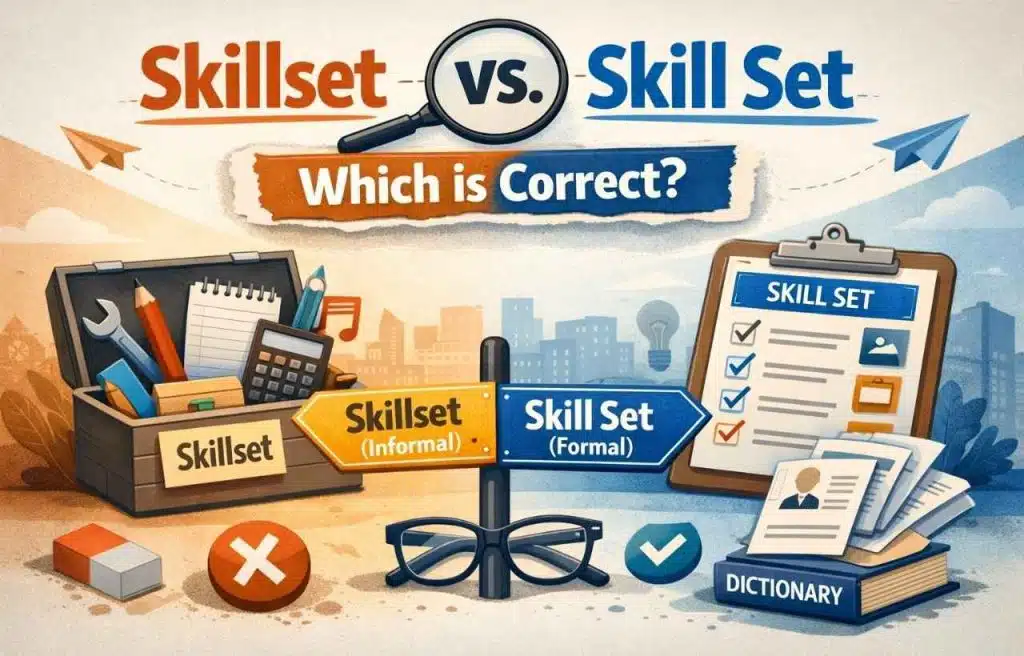

Many people feel confused about “skillset vs skill set” and wonder which one is correct. You might have seen both forms in articles, resumes, or job descriptions. So, is “skillset” one word, or should you write it as “skill set”? Understanding the correct spelling of skill set is important, especially in professional writing.
In simple terms, a skill set refers to a group of abilities, competencies, and expertise that a person has. These skills help you perform tasks and grow in your career. Whether you are a student or a professional, knowing your personal skill set or job skill set can make a big difference.
In this guide, you will learn the skillset meaning, correct usage, and how to improve your professional skill set step by step.
Quick Answer:
“Skill set” is the correct and widely accepted term in professional and formal writing, including resumes and job descriptions. “Skillset” is often used informally but is considered nonstandard by many style guides. To ensure clarity, credibility, and a polished impression—especially for ATS-friendly resumes—use skill set consistently.
What Is a Skill Set?
A skill set is a group of skills, abilities, and competencies that a person has. These skills help you complete tasks in daily life and at work. Your skill set meaning includes both what you learn in school and what you gain from experience. For example, communication, problem-solving, and technical knowledge are all part of a professional skill set.
There are different types of skill sets, such as personal skill set and job skill set. A student may have study and time management skills, while a worker may have leadership and computer skills. Knowing your skill set examples helps you understand your strengths. It also helps you grow faster and choose the right career path.
Skillset vs Skill Set: What’s the Difference?
The difference between skillset vs skill set is simple but important. The correct and widely accepted form is “skill set” (two words). It is used in formal writing, job descriptions, and professional content. On the other hand, “skillset” (one word) is informal and less accepted.
Many people ask, is skillset one word or two? The answer is: both exist, but “skill set” is correct spelling in standard English. The confusion happens because language changes over time. Still, for clear and professional writing, always use skill set vs skillset carefully.
Using the right form improves your writing and helps you look more professional, especially in resumes and emails.
Is “Skillset” Correct or Incorrect?
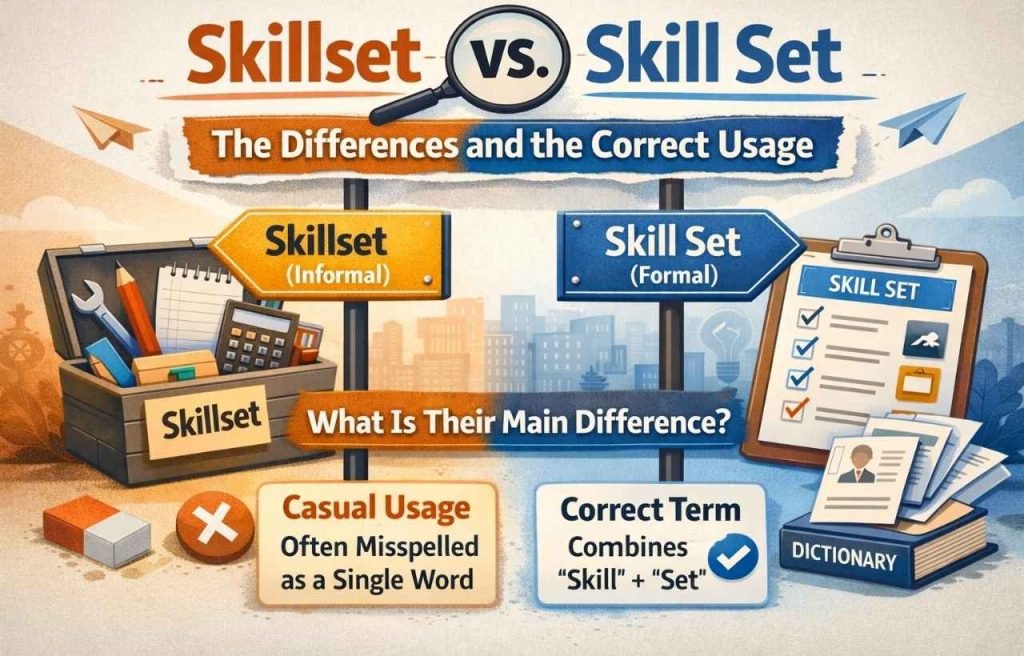
A common question is: is skillset correct or incorrect? The answer is that “skillset” is not fully wrong, but it is not the preferred form in formal writing. Most grammar experts and dictionaries suggest using “skill set” instead.
In simple words, skillset vs skill set difference comes down to usage. The two-word form is standard, while the one-word form is informal. If you are writing a resume, article, or professional email, you should use correct spelling of skill set.
Some blogs and websites may still use skillset meaning, but it is safer to follow the proper grammar rules. This small detail can make your writing clearer and more professional.
Examples of Skill Set in Sentences
Using skill set in sentences helps you understand correct usage. Here are simple examples:
- She has a strong communication skill set.
- His technical skill set helped him get the job.
- I want to improve my professional skill set.
- Their team has a diverse job skill set.
Now look at incorrect usage:
- He has a strong skillset.
Correct form:
- He has a strong skill set.
These skillset vs skill set examples show how to use the right form. Practicing these sentences will improve your writing. It also helps you use skill set examples correctly in real life, especially in resumes and emails.
Types of Skill Sets
There are different types of skill sets that people use in daily life and work. The main types are hard skills and soft skills. Hard skills are technical abilities like coding, writing, or using tools. Soft skills include communication, teamwork, and problem-solving.
Another important type is transferable skills. These are skills you can use in different jobs, like leadership or time management. Your professional skill set often includes a mix of all these skills.Understanding these types helps you build a strong personal skill set. It also helps you choose which skills to improve. A balanced job skill set makes you more valuable and increases your chances of success.
Why Skill Sets Matter in Career Growth
Your skill set plays a big role in your career growth. Employers look at your job skill set before hiring you. A strong professional skill set shows that you can handle tasks and solve problems.
Having the right skills list helps you stand out from others. It also increases your chances of getting better jobs and higher salaries. That’s why many people search for best skills to learn for career growth.
Your personal skill set also helps you improve confidence and performance. When you keep learning, your value increases. In simple words, improving your skill set meaning leads to better opportunities and long-term success.
Common Mistakes to Avoid
Many people make small mistakes when using skill set. One common mistake is writing “skillset” instead of the correct skill set. This can make your writing look less professional.
Another mistake is listing too many skills. A long skills list without focus can confuse employers. Always include relevant job skill set only.
Some people also mix hard and soft skills without clarity. It is better to organize your professional skill set properly. Avoid copying generic skill set examples without understanding them.
Fixing these mistakes improves your writing and presentation. It also helps you create a clear and strong personal skill set.
Skill Set vs Related Terms
Many people confuse skill set with similar terms. A skill is one ability, while a skill set is a group of skills. This is the basic skill vs skill set difference.
Other related words include abilities, competencies, and expertise. Abilities are natural talents, while skills are learned. Competencies combine skills and knowledge.
Understanding these differences improves your skillset meaning. It also helps you use the right words in writing. A clear idea of these terms makes your professional skill set stronger and more organized.
Quick Summary Table
Here is a quick summary of skillset vs skill set:
- Skill set → Correct and formal
- Skillset → Informal and less preferred
- Meaning → Group of skills and abilities
- Use → Resume, jobs, and daily life
A strong skill set includes both hard and soft skills. It helps in career growth and success. Always use the correct spelling of skill set in professional writing.
This simple summary helps you remember the key points. It also makes it easier to use your job skill set correctly in real situations.
Conclusion
Understanding skillset vs skill set is important for clear and professional writing. The correct form is skill set, especially in resumes, emails, and formal content. While skillset is sometimes used, it is better to avoid it.
Your skill set meaning goes beyond grammar. It includes your abilities, strengths, and competencies. Building a strong professional skill set helps you grow in your career.
Focus on learning new skills and improving your personal skill set. With time and practice, you can achieve your goals. A clear and strong job skill set can open many new opportunities for your future.