Skip to content
GrammarDock

GrammarDock

  • Home
  • About Us
  • Blog
  • Contact Us

Blog

Home » Blog
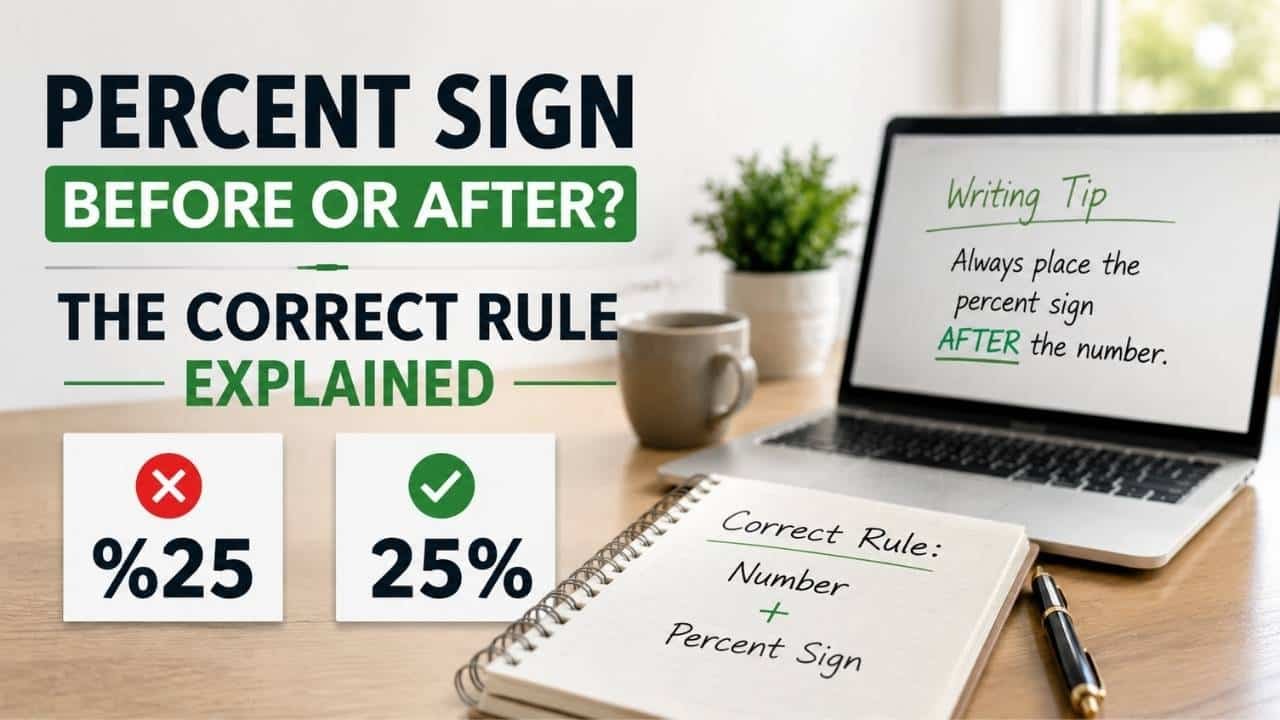
When you write a percentage in English, you may wonder whether the percent sign goes before or after the number.
Posted inGrammar

Percent Sign Before or After? The Correct Rule Explained 

When you write a percentage in English, you may wonder whether the percent sign goes before or after the number. The standard format in American…
Continue Reading
08/09/2026
Have you ever received an important warning from a friend, coworker, or family member and replied, "Thanks for the heads up"?
Posted inGrammar

Thanks for the Heads Up Meaning Grammar and Examples 

Have you ever received an important warning from a friend, coworker, or family member and replied, "Thanks for the heads up"? This common English expression…
Continue Reading
08/07/2026
Whether you are attending a birthday, hosting a holiday dinner, or joining a graduation celebration, knowing a few awesome party expressions can make your conversations sound more natural and enjoyable.
Posted inWriting Tips

Awesome Party Expressions: 75+ Fun Phrases, Idioms & Examples

Whether you are attending a birthday, hosting a holiday dinner, or joining a graduation celebration, knowing a few awesome party expressions can make your conversations…
Continue Reading
08/06/2026
Have you ever stumbled over a sentence filled with S sounds? That's exactly why S tongue twisters are such a fun and effective way to improve your speaking skills.
Posted inWriting Tips

S Tongue Twisters 100+ Practice Sentences for Fluency

Have you ever stumbled over a sentence filled with S sounds? That's exactly why S tongue twisters are such a fun and effective way to…
Continue Reading
08/04/2026
Home idioms and expressions make English more colorful, natural, and expressive.
Posted inGrammar

Home Idioms and Expressions: 70+ Common Phrases + Meanings 

Home idioms and expressions make English more colorful, natural, and expressive. Native speakers use these idiomatic expressions every day in conversations, books, movies, and even…
Continue Reading
08/03/2026
Whether you're expanding your English vocabulary, improving your writing, or searching for words that end in SE for a word game, having a well-organized list can save time and boost your confidence. 
Posted inWriting Tips

Words That End in SE: Common, Positive & Useful English Words

Whether you're expanding your English vocabulary, improving your writing, or searching for words that end in SE for a word game, having a well-organized list…
Continue Reading
07/30/2026
Metonymy vs synecdoche explained with simple examples and clear differences chart for easy understanding
Posted inGrammar

Metonymy vs Synecdoche: Clear Difference, Definition & Examples

Many learners struggle to understand the difference between metonymy and synecdoche because both belong to figures of speech and often appear similar. If you have…
Posted by Dustin Hoffman 04/30/2026
Trailer vs Trailor comparison showing correct spelling of trailer and common spelling mistake trailor in English grammar and writing
Posted inWriting Tips

Trailer or Trailor: What’s the Correct Spelling? Full Guide Examples

Many people feel confused about “trailer vs trailor” when writing in English. The truth is simple: “trailer” is the correct spelling, while “trailor” is a…
Posted by Dustin Hoffman 04/28/2026
Basic English grammar rules illustration showing sentence structure, parts of speech, and simple examples for beginner learners.
Posted inWriting Tips

Grammar or Grammer: Correct Spelling, Meaning & Easy Rules

Many learners feel confused about “grammar or grammer”, especially when writing quickly. Let’s clear this up right away. The correct spelling is “grammar,” while “grammer”…
Posted by Dustin Hoffman 04/27/2026
Simple comparison table showing analogy vs allegory differences with definitions, examples, and usage in literature
Posted inWriting Tips

Analogy vs Allegory: Secrets You Must Know Today Explained

Understanding analogy vs allegory is important because both are common literary devices used in writing, literature, and everyday communication. Many students get confused when trying…
Posted by Dustin Hoffman 04/25/2026
Flavor vs flavour comparison showing American and British English spelling difference with examples of usage in food context
Posted inWriting Tips

Flavor vs Flavour: Shocking Truth Most Writers Miss 

Understanding “flavor vs flavour” is simple once you know the basic rule. Both words have the same meaning—they refer to the taste of food or…
Posted by Dustin Hoffman 04/25/2026
Is it Pallette or Palette Spelling Mistake Explained
Posted inGrammar

Is it Pallette or Palette Spelling Mistake Explained

Many people get confused when they search “is it pallette or palette” because English words often sound similar but have different spellings and meanings. The…
Posted by Dustin Hoffman 04/24/2026
Real life examples illustrating irony vs coincidence, showing how unexpected events differ from meaningful opposite outcomes in daily situations
Posted inWriting Tips

Irony vs Coincidence: A Simple Guide with Examples

Many people often confuse irony vs coincidence, especially in everyday conversations. You may hear someone say, “That’s ironic!” when it’s actually just a coincidence. So,…
Posted by Dustin Hoffman 04/23/2026
English conversation examples showing how to use ill and sick in daily speaking with simple sentences for learners and students
Posted inWriting Tips

Ill vs Sick: What Is the Real Difference? When to Use Each?

Many English learners feel confused about ill vs sick because both words seem to have the same meaning. In simple terms, both “ill” and “sick”…
Posted by Dustin Hoffman 04/22/2026
When someone says they will finish the project by hook or by crook, they are not just saying they will try hard.
Posted inWriting Tips

By Hook or by Crook: Meaning, Origin, and How to Use This Idiom

You have probably heard someone say they will get something done "by hook or by crook" — and wondered what hooks and crooks have to…
Posted by Dustin Hoffman 04/21/2026
Understand the real difference between word vs term with clear examples. Learn how each is used in language, writing, and technical contexts.
Posted inWriting Tips

Word vs Term: What’s the Difference and When Does It Matter?

Most people use "word" and "term" as if they mean the same thing. In everyday conversation, that usually works fine. But if you write professionally,…
Posted by Dustin Hoffman 04/20/2026

Posts pagination

Previous page 1 … 8 9 10 11 12 … 19 Next page
Recent Posts
  • Percent Sign Before or After? The Correct Rule Explained 
  • Thanks for the Heads Up Meaning Grammar and Examples 
  • Awesome Party Expressions: 75+ Fun Phrases, Idioms & Examples
  • S Tongue Twisters 100+ Practice Sentences for Fluency
  • Home Idioms and Expressions: 70+ Common Phrases + Meanings 
  • Home
  • Contact Us
  • Blog
  • About Us

grammardock@gmail.com

Copyright 2026 GrammarDock . All rights reserved.
Scroll to Top