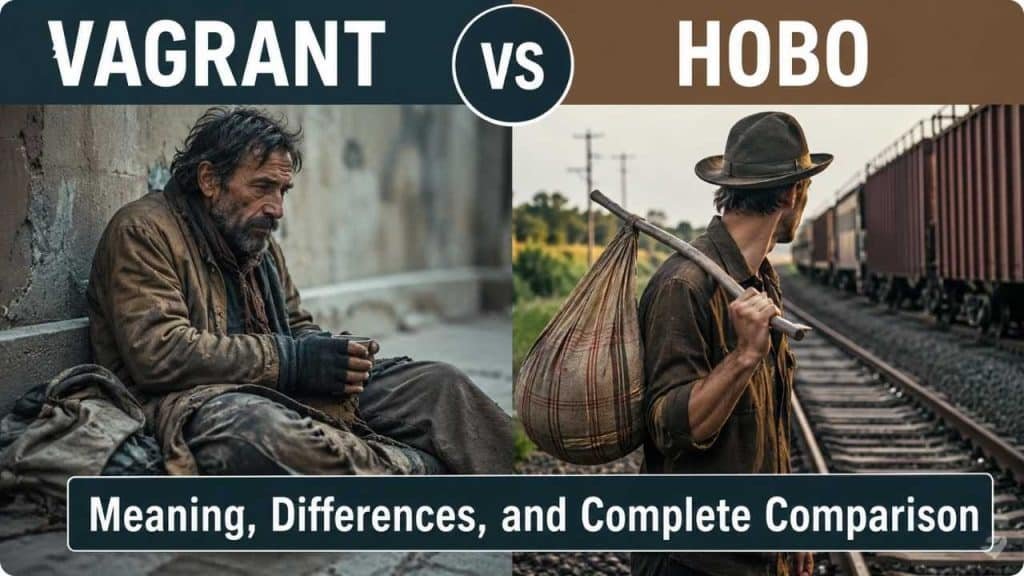

Many people search for Vagrant vs Hobo because these two words often look similar, but they are not the same. The confusion usually comes from how both terms describe people who travel or live without a stable home. However, their meaning, history, and usage are quite different.
A hobo is mostly linked to old American culture, where people traveled and worked temporary jobs, especially during the railroad era. A vagrant, on the other hand, is more of a legal or formal term used to describe someone without a fixed home or job.
In this article, we will explain the difference between vagrant and hobo, their meanings, and how people use these words today. You will also learn examples, history, and modern usage to clearly understand hobo vs vagrant differences in simple English.
Quick Answer
A vagrant is a formal/legal term for a person without stable home or work, while a hobo is a historical term for a traveling worker who moved around seeking temporary jobs.
So, in short:
- Vagrant vs Hobo = legal status vs cultural lifestyle
- Vagrant = formal/legal usage
- Hobo = old American railroad-era worker term
What Is a Vagrant?

A vagrant is a person who moves from place to place without a permanent home or stable job. The vagrant meaning is often connected with legal or social definitions, especially in laws related to vagrancy. In simple terms, a vagrant does not have a fixed place to live and may depend on temporary support.
The vagrant definition is commonly used in official or legal contexts. It does not describe a lifestyle choice in most cases. Instead, it focuses on lack of housing or employment stability. Because of this, the term can sometimes feel formal or even negative.
In modern usage, the word “vagrant” is less common in daily conversation. People now prefer the word “homeless.” When comparing vagrant vs hobo meaning, vagrant is more structured and legal, while hobo is more cultural and historical.
What Is a Hobo?
A hobo refers to a person who travels from place to place, often looking for temporary work. The hobo meaning comes from American history, especially during the late 1800s and early 1900s when railroads were common. Hobos often moved by train and worked seasonal jobs.
The hobo definition is more cultural than legal. It describes a lifestyle where people choose or accept traveling work. In simple terms, hobos were known for mobility and survival skills during tough economic times.
Unlike the vagrant vs hobo difference, a hobo is not usually defined by law. Instead, it is part of social history and storytelling. Today, the word “hobo” is considered old-fashioned and is rarely used in formal English.
When comparing hobo vs vagrant difference, hobos are linked with work and travel culture, while vagrants are linked with legal status or lack of housing.
Vagrant vs Hobo (Key Differences Explained)
The main difference between hobo and vagrant lies in meaning, usage, and context. A vagrant is usually defined in legal or formal terms, while a hobo is linked with historical and cultural lifestyle.
A vagrant does not have stable housing or work and is often described in legal systems. In contrast, a hobo traditionally traveled to find temporary jobs, especially during difficult economic times. This makes the hobo vs vagrant difference clear in terms of intent and background.
Another key point is usage. The vagrant and hobo comparison shows that “vagrant” is still used in legal language, while “hobo” is mostly outdated in modern English.
In simple words, when people ask are hobo and vagrant the same, the answer is no. One is a legal term, and the other is a cultural term with historical roots.
Comparison Table: Vagrant vs Hobo
| Feature | Vagrant | Hobo |
| Meaning | Person without stable home or job | Traveling worker seeking temporary jobs |
| Usage | Legal / formal context | Historical / cultural context |
| Origin | Legal terminology | Railroad-era American culture |
| Connotation | Often formal or negative | Old-fashioned but cultural |
| Modern use | Rare, replaced by “homeless” | Rare, mostly historical |
This vagrant vs hobo comparison table helps clearly show the hobo vs vagrant meaning difference in a simple format. It highlights how both terms describe mobility but in very different ways. While “vagrant” focuses on legal status, “hobo” reflects a historical lifestyle based on work and travel.
Historical Background You Should Know
The history of hobo culture goes back to the late 19th century in the United States. Many workers traveled by train to find seasonal jobs. This lifestyle became known as “hobo culture,” especially during economic hardships like the Great Depression.
On the other hand, the concept of a vagrant comes from older legal systems. The vagrancy law meaning was used to describe people without stable work or housing. Governments often used this term for regulation and control.
Over time, both words changed in meaning. The difference between hobo and vagrant became clearer as society evolved. Hobos became part of cultural history, while vagrants became a legal classification.
This historical background helps explain why the hobo vs vagrant difference still matters today in language and usage.
Modern Usage of Vagrant and Hobo Today
In modern English, both hobo and vagrant are used less frequently. The word “vagrant” is still seen in legal documents, but in daily speech, people prefer the word “homeless.”
The modern meaning of hobo is mostly historical. It refers to old traveling workers rather than people today. Similarly, the modern definition of vagrant has shifted toward legal or official usage.
Many people now ask if is hobo a slang word or if is vagrant offensive. In general, both terms can sound outdated or sensitive depending on context.
When comparing vagrant vs hobo meaning today, both words are rarely used in modern conversation. Instead, clearer and more respectful terms like “homeless person” or “migrant worker” are preferred.
Vagrant vs Homeless vs Hobo (Common Confusion)
People often mix up vagrant, hobo, and homeless, but they are not the same. A homeless person is someone without stable housing today. A vagrant is a legal term for someone without work or home. A hobo refers to a historical traveling worker.
The vagrant vs homeless vs hobo comparison shows clear differences in meaning and context. Homeless is the modern and respectful term used today. Vagrant is more legal, while hobo is mostly historical.
The confusion happens because all three involve movement or lack of stable housing. However, the difference between hobo and vagrant explained simply is that one is cultural, and the other is legal.
Understanding this helps avoid misuse of terms and improves clear communication in English.
Common Misconceptions About Hobo and Vagrant
Many people think that hobo and vagrant are the same, but this is incorrect. A hobo is not just a person without a home; it is a historical term for traveling workers.
Another misconception is that all vagrants are criminals. In reality, the vagrant definition simply describes lack of stable housing or work, depending on legal systems.
Some also believe that the word “hobo” is still commonly used, but in modern English, it is mostly outdated. The hobo vs vagrant explanation for students shows that both words belong to different contexts.
Clearing these misconceptions helps people understand the true difference between vagrant and hobo more accurately.
Real-Life Examples of Usage
Here are simple examples to understand usage:
- A man without a permanent job was labeled a vagrant under local law.
- During the railroad era, many hobos traveled across the country for work.
- The story describes a hobo vs vagrant difference in historical context.
- Teachers explain the difference between hobo and vagrant examples in English class.
- Modern usage rarely includes the word hobo or vagrant in daily conversation.
These examples show how both words function in different contexts. The vagrant vs hobo explanation for students becomes clearer when seen in real sentences. It also helps learners understand hobo vs vagrant usage in sentences easily.
FAQs
What is the difference between vagrant and hobo?
A vagrant is a legal term, while a hobo is a historical traveling worker.
Is hobo a slang word?
Yes, it is informal and mostly outdated today.
Is vagrant a legal term?
Yes, it is commonly used in legal systems.
Are hobos homeless people?
Not exactly. Hobos were traveling workers in history.
Which term is more offensive?
Both can be sensitive depending on context, so modern English prefers “homeless.”
Conclusion
The difference between vagrant and hobo is mainly about context, history, and usage. A vagrant is a formal or legal term, while a hobo belongs to cultural history. Both terms are now less common in modern English.
Understanding hobo vs vagrant meaning helps avoid confusion and improves language accuracy. Today, people mostly use the word “homeless” instead of either term. By learning these differences, you can clearly understand how English vocabulary evolves over time.