
Understanding analogy vs simile helps you avoid one of the most common grammar confusions in English writing. Both are forms of figurative language, but they work in different ways. A simile compares two things directly using words like “like” or “as”, while an analogy explains a deeper relationship between two ideas to make something easier to understand.
Many learners search for the difference between analogy and simile because both seem similar at first. However, the purpose is not the same. A simile focuses on quick visual comparison, while an analogy focuses on explanation and reasoning.
In this article, you will see clear definitions, simple analogy vs simile examples, and a step-by-step breakdown of when to use each. This will give you a simple, practical understanding of analogy vs simile explained in the easiest way possible.
Quick Answer
The main difference between analogy and simile is that a simile compares two things using “like” or “as” to create a simple image, while an analogy explains a deeper relationship between two ideas. Similes describe similarities, but analogies explain meaning. This makes analogy vs simile an important topic for clear understanding in English writing and learning.
What Is an Analogy?
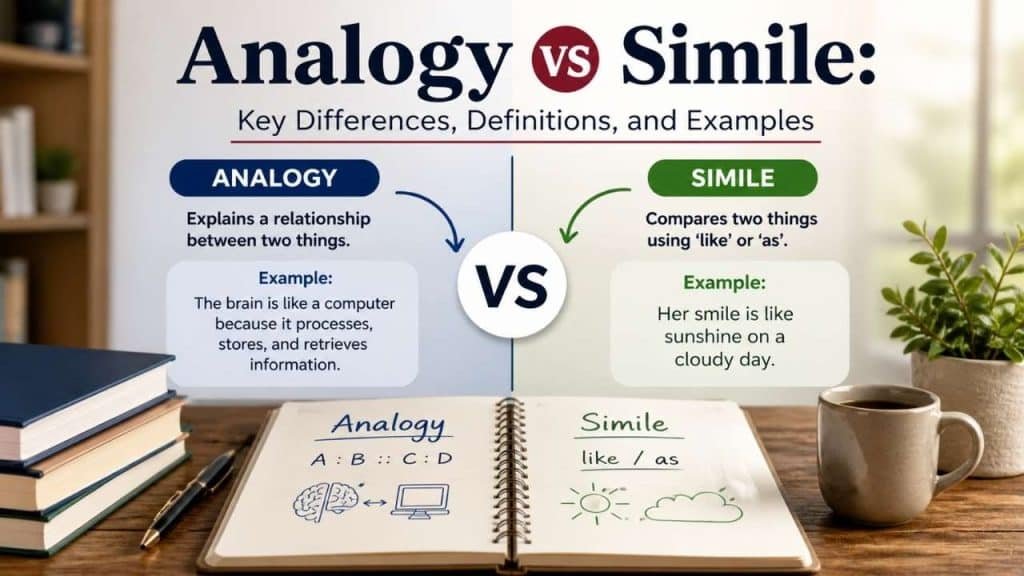
An analogy is a way of explaining something by comparing it to something else that is easier to understand. It shows a clear relationship between two ideas, not just a simple comparison.
When people search for analogy definition, they want to understand how it helps explain complex ideas in a simple way. For example, saying “the brain is like a computer” is an analogy because it explains how memory and processing work.
Unlike a simile, an analogy gives more detail and meaning. It is often used in teaching, writing, and communication to make ideas clear.
You will often see analogy examples in science, education, and everyday speech. This makes analogy vs simile an important topic in learning figurative language. An analogy helps the reader understand why something works, not just what it looks like.
What Is a Simile?
A simile is a simple way to compare two different things using the words “like” or “as.” It helps create a clear picture in the reader’s mind.
When people search for simile definition, they usually want easy simile examples to understand it better. For example, “He is as fast as a cheetah” is a simile because it compares speed in a simple way.
A simile does not explain a deep idea. It only shows similarity between two things. This is why similes are often used in poems, stories, and daily writing to make language more colorful.
Understanding simile meaning helps you see how it is different from an analogy. In analogy vs simile, the simile is more about imagination and visual comparison, not explanation or reasoning. It is short, simple, and easy to use in everyday English.
Analogy vs Simile: Key Differences at a Glance
The difference between analogy and simile becomes clear when you compare their purpose and structure. A simile only shows a quick similarity using “like” or “as,” while an analogy explains a deeper idea or relationship between two things.
In simple terms, a simile helps you see something, but an analogy helps you understand something. This is why analogy vs simile examples are often used in learning English.
A simile is short and descriptive. An analogy is longer and more detailed because it explains how something works. For example, similes appear in sentences like “cold as ice,” while analogies explain ideas like comparing electricity flow to water pipes.
This figurative language comparison helps learners clearly understand analogy vs simile explained in real use. Both are useful, but they serve different writing purposes.
Are Similes a Type of Analogy?
Many learners ask, “is a simile an analogy?” The answer is not fully simple, but here is an easy way to understand it. A simile is not the same as an analogy, but it can sometimes be part of one.
A simile only makes a direct comparison using “like” or “as.” However, an analogy explains a full idea or relationship, often using more than one comparison.
This is why confusion happens in analogy vs simile topics. A simile stays short and visual, while an analogy goes deeper and explains meaning.
For example, saying “life is like a journey” is a simile. But expanding it into how life has stages, challenges, and directions becomes an analogy.
So, in simple terms, a simile can support an analogy, but it does not replace it. This clears the common confusion in analogy vs simile differences and similarities.
Analogy vs Simile Examples Side by Side
Understanding analogy vs simile examples side by side makes the difference very clear. Both use comparison, but they work in different ways.
For example:
- Simile: “Her voice is like music.”
- Analogy: “Her voice is like music because it soothes people and changes their mood.”
Another example:
- Simile: “He is as strong as a lion.”
- Analogy: “He is like a lion because he protects others and shows leadership.”
In both cases, the simile gives a quick image, while the analogy explains the reason behind the comparison. This is why learners search for analogy vs simile examples sentences to understand real usage.
When you study analogy vs simile explained, always focus on this difference: similes show similarity, analogies explain meaning. This simple approach helps improve writing and understanding in English.
When Should You Use an Analogy vs a Simile?
Knowing when to use analogy vs simile helps improve your writing and communication. A simile is best when you want to create a quick image or make your writing more expressive. It works well in stories, poems, and daily speech.
For example, saying “as busy as a bee” quickly shows meaning without explanation. This is why people often use simile examples in creative writing.
An analogy, however, is better when you want to explain a complex idea in a simple way. It is often used in teaching, learning, and professional communication.
For example, explaining the internet like a “web of roads” helps people understand how information travels. This is a clear case of analogy vs simile in writing.
So, use similes for imagery and analogies for explanation. This simple rule makes analogy vs simile explained very easy to remember.
Common Mistakes People Make When Confusing Them
Many learners mix up analogy vs simile because both use comparisons. One common mistake is thinking they mean the same thing. But this is not correct.
A simile only creates a simple image using “like” or “as.” An analogy explains a deeper idea or connection between two things. When people ignore this difference, their writing becomes unclear.
Another mistake is using similes when explanation is needed. For example, saying only “the brain is like a computer” is a simile. But without explaining how memory or processing works, it is not a full analogy.
This confusion often appears in analogy vs simile examples used by beginners.
To avoid mistakes, remember this simple rule: similes show similarity, analogies show explanation. Understanding this helps improve clarity in writing and avoids confusion in analogy vs simile meaning.
Analogy vs Simile vs Metaphor (Expanded Comparison)
To fully understand figurative language, it helps to compare analogy vs simile vs metaphor. These three are related but different.
A simile uses “like” or “as” to show a quick comparison. A metaphor says one thing is another, like “time is a thief.” An analogy goes further and explains a full relationship between ideas.
For example, a simile might say “life is like a game.” A metaphor would say “life is a game.” But an analogy would explain how life has rules, challenges, and goals like a game.
This shows why analogy vs simile examples are often not enough without deeper explanation.
When learners study analogy vs simile explained, adding metaphors helps complete the picture. Each tool has a different purpose, but all help improve understanding and communication in English writing.
Simple Trick to Remember the Difference
A very easy way to remember analogy vs simile is to focus on their purpose.
A simile = short comparison using “like” or “as.”
An analogy = full explanation of a relationship between two ideas.
Think of it like this: a simile helps you see something quickly, while an analogy helps you understand something deeply.
For example, saying “busy as a bee” is a simile because it shows an image. But explaining how teamwork in a company is like a beehive is an analogy because it explains structure and roles.
This simple trick helps students quickly understand analogy vs simile meaning without confusion.
So, whenever you see analogy vs simile examples, just ask: Is it showing an image or explaining an idea? That answer will always guide you correctly.
FAQs
What is the main difference between analogy and simile?
The main difference between analogy and simile is that a simile shows a quick comparison using “like” or “as,” while an analogy explains a deeper relationship between two ideas to make something easier to understand.
What is a simile in simple words?
A simile is a figure of speech that compares two things using “like” or “as.” For example, “as fast as a cheetah” is a simile because it creates a simple image in the reader’s mind.
What is an analogy in simple words?
An analogy explains something by comparing it to something else. It shows how two things are related and helps explain complex ideas in a simple way, such as comparing the brain to a computer.
Is a simile a type of analogy?
A simile is not exactly an analogy, but it can sometimes be part of one. A simile only compares, while an analogy explains a full idea or relationship in detail.
Can you give analogy vs simile examples?
Yes. Simile: “Her smile is like sunshine.”
Analogy: “Her smile is like sunshine because it makes people feel happy and warm.”
Why do people confuse analogy and simile?
People confuse them because both use comparisons. However, simile vs analogy difference lies in depth—similes are simple, while analogies explain meaning and relationships.
Where are similes commonly used?
Similes are often used in poems, stories, and everyday speech to make writing more creative and expressive using simple comparisons.
Where are analogies commonly used?
Analogies are used in teaching, science, and communication to explain difficult ideas in a simple and understandable way.
What is an example of analogy vs simile in writing?
Simile: “He is as strong as a lion.”
Analogy: “He is like a lion because he protects his family and shows leadership.”
What is easier to understand: analogy or simile?
A simile is easier because it is short and visual. An analogy is more detailed because it explains a relationship or idea.
Why is understanding analogy vs simile important?
Understanding analogy vs simile helps improve writing, reading comprehension, and communication skills by making ideas clearer and more meaningful.
Conclusion
Understanding analogy vs simile helps you use English more clearly and confidently. A simile gives a quick comparison using “like” or “as,” while an analogy explains a deeper relationship between two ideas. Both are important parts of figurative language, but they serve different purposes in writing.
If you focus on simile examples, you will improve your descriptive writing. If you use analogy examples, you will improve your ability to explain complex ideas in a simple way.In short, similes help readers see ideas, while analogies help them understand ideas. This simple difference makes analogy vs simile explained easy to remember and apply in real writing, exams, and communication.