

Many people confuse illicit vs elicit because the two words sound almost the same. However, their meanings are completely different. Illicit means something illegal or forbidden, while elicit means to draw out a response, reaction, or answer. This difference between illicit and elicit often creates grammar mistakes in writing and speaking.
If you want to improve your English grammar, vocabulary, and word usage, understanding these commonly confused words is important. In this guide, you will learn the illicit meaning, the elicit meaning, pronunciation tips, and simple sentence examples. You will also discover easy memory tricks to remember the correct word every time. By the end, you will clearly understand what is the difference between illicit and elicit and how to use each word correctly in real sentences.
Quick Answer
Illicit means something illegal or forbidden, while elicit means to draw out a response, feeling, or reaction. Although these commonly confused words sound similar, they have different meanings and grammar roles. Illicit is an adjective, and elicit is a verb. Remember this easy trick: illicit = illegal and elicit = extract to avoid grammar mistakes in writing.
Quick Difference Between Illicit and Elicit
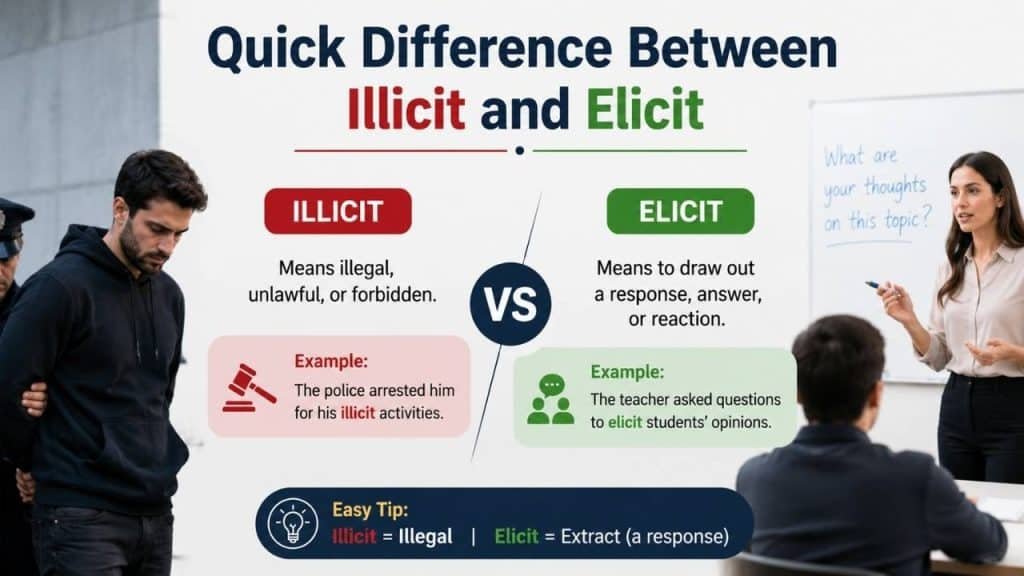
The main difference between illicit and elicit is simple once you understand their meanings. Illicit describes something illegal, forbidden, or not allowed by law. People often use this word when talking about crime, banned activities, or unlawful actions. For example, “Police stopped the illicit trade of fake products.”
On the other hand, elicit means to draw out a response, feeling, or reaction from someone. It is a verb that people use in communication and conversations. For example, “The teacher tried to elicit answers from the students.”
Although these commonly confused words sound alike, they have different grammar roles and meanings. Illicit is an adjective, while elicit is a verb. Learning this basic rule will help you avoid grammar mistakes and improve your English vocabulary and writing skills.
What Does “Illicit” Mean?
The word illicit means something illegal, unlawful, or not socially accepted. Writers often use this word to describe activities, products, or relationships that break rules or laws. Since illicit is an adjective, it describes a noun in a sentence. Understanding the illicit meaning can help you avoid confusion with similar sounding words like elicit.
You may hear phrases such as illicit drugs, illicit trade, or illicit activities in news reports and legal discussions. For example, “The police discovered an illicit business operating at night.” In this sentence, the word describes an illegal business.
The pronunciation of illicit sounds similar to elicit, which causes many grammar mistakes. However, remembering that illicit = illegal is an easy memory trick. This simple connection helps many English learners use the correct word in writing and speaking.
What Does “Elicit” Mean?
The word elicit means to draw out, bring out, or receive a reaction, response, or feeling from someone. Unlike illicit, this word is a verb, so it shows an action in a sentence. People often use elicit in communication, education, interviews, and conversations. Understanding the elicit meaning makes it easier to avoid confusing it with illicit.
For example, a teacher may ask questions to elicit answers from students. A funny joke may elicit laughter from an audience. In both examples, the word means to bring out a reaction or response.
Many people confuse illicit vs elicit because they sound alike, but their meanings are very different. An easy memory trick is to remember that elicit = extract. Both words start with the letter “E,” which can help you remember the correct meaning and improve your grammar skills.
Illicit vs Elicit: Side-by-Side Comparison
Understanding illicit vs elicit becomes easier when you compare them directly. These commonly confused words may sound similar, but they have different meanings, grammar roles, and uses in sentences. Illicit is an adjective that describes something illegal or forbidden. Elicit is a verb that means to draw out a response or reaction.
For example, “The company faced problems because of its illicit activities” uses the word as a description. In contrast, “The speaker tried to elicit feedback from the audience” shows an action. This difference between illicit and elicit is important in English writing and communication.
A simple way to remember the difference is this: illicit = illegal and elicit = extract. Once you connect the meanings with these easy memory tricks, you can avoid grammar mistakes and use both words correctly in everyday writing.
Easy Trick to Remember Illicit vs Elicit
Many English learners struggle with illicit vs elicit because the words sound almost identical. A simple memory trick can help you remember the correct meaning quickly. Think of illicit and illegal together because both words start with “Ill.” This connection makes it easier to remember that illicit describes something unlawful or forbidden.
Now think of elicit and extract together because both words begin with the letter “E.” The word elicit means to draw out a response, feeling, or reaction from someone. For example, a good question may elicit honest feedback from students or employees.
These easy memory tricks can reduce grammar mistakes and improve your English vocabulary. Many commonly confused words become easier when you connect them with simple word associations. Practicing sentence examples regularly will also help you remember the difference between illicit and elicit naturally.
Illicit vs Elicit Examples in Real Sentences
Reading real sentence examples is one of the best ways to understand illicit vs elicit correctly. These examples show how each word works in everyday English writing and communication.
Illicit examples:
- The police stopped an illicit drug operation.
- The company faced punishment for its illicit business practices.
- Reporters uncovered an illicit trade network.
Elicit examples:
- The teacher asked questions to elicit student responses.
- His speech managed to elicit strong emotions from the audience.
- The survey helped the company elicit customer feedback.
These sentence examples clearly show the difference between illicit and elicit. Remember that illicit usually appears in legal or negative situations, while elicit often appears in conversations, communication, and emotional responses. Practicing these examples can improve your grammar, vocabulary, and overall writing accuracy.
Common Mistakes People Make
Many writers make grammar mistakes with illicit vs elicit because the words sound very similar. One common mistake is using illicit when talking about reactions or responses. Since illicit means illegal or forbidden, it should only describe unlawful actions or activities.
Another mistake happens when people use elicit to describe something criminal or banned. Remember that elicit is a verb that means to draw out a response, emotion, or answer. For example, saying “The speech was illicit emotions” is incorrect. The correct sentence is “The speech elicited emotions from the audience.”
Spelling confusion also causes problems because both words share similar letters and pronunciation. A quick memory trick can help: illicit = illegal and elicit = extract. Learning these commonly confused words through sentence examples and daily practice can improve your English grammar and help you write more clearly and confidently.
Why Are Illicit and Elicit Confused?
People often confuse illicit and elicit because the words look and sound almost the same. Their pronunciation is very similar, which creates confusion in speaking and writing. Both words also share many of the same letters, so English learners sometimes mix them up while typing or reading quickly.
Another reason for the confusion is that these commonly confused words appear in formal writing, news articles, and academic content. Many people understand one word but forget the meaning of the other. Since illicit is an adjective and elicit is a verb, grammar roles also create mistakes for beginners.
The easiest way to avoid confusion is to focus on their meanings. Illicit relates to illegal actions, while elicit relates to drawing out a response or emotion. Using memory tricks, pronunciation practice, and real sentence examples can help you remember the difference between illicit vs elicit more naturally and improve your vocabulary skills.
FAQs About Illicit vs Elicit
What is the difference between illicit and elicit?
The main difference between illicit and elicit is their meaning. Illicit means illegal or forbidden, while elicit means to draw out a response, emotion, or reaction from someone.
Is illicit always related to illegal activities?
Yes, the word illicit usually describes something unlawful, banned, or against rules. People often use it in legal or negative situations like illicit drugs or illicit trade.
What does elicit mean in English?
The word elicit means to bring out or receive a response, answer, feeling, or reaction. For example, teachers ask questions to elicit responses from students.
Is illicit a verb or an adjective?
Illicit is an adjective because it describes a noun. For example, “The police stopped an illicit business operation.”
Is elicit a noun or a verb?
Elicit is a verb because it shows an action. It means to draw out a response, reaction, or emotion from someone.
How do you remember illicit vs elicit easily?
A simple memory trick is:
- Illicit = Illegal
- Elicit = Extract
Both word pairs start with the same letters, which makes them easier to remember.
Why do people confuse illicit and elicit?
People confuse illicit vs elicit because the words look and sound very similar. Their pronunciation and spelling create confusion in speaking and writing.
How do you use illicit in a sentence?
Example: “The government worked to stop the illicit sale of fake medicines.”
How do you use elicit in a sentence?
Example: “The comedian’s jokes helped elicit laughter from the audience.”
Can illicit and elicit ever be interchangeable?
No, illicit and elicit are never interchangeable because they have completely different meanings and grammar roles.
What are common examples of illicit activities?
Common examples include illicit drugs, illegal trade, smuggling, and unlawful business operations.
What kinds of responses can elicit describe?
The word elicit can describe emotional, verbal, or physical reactions such as feedback, laughter, answers, opinions, or emotions.
Conclusion
Understanding illicit vs elicit is important for clear and correct English writing. Although these commonly confused words sound similar, their meanings are completely different. Illicit refers to something illegal or forbidden, while elicit means to draw out a response, feeling, or reaction from someone.
Remembering the simple trick—illicit = illegal and elicit = extract—can help you avoid common grammar mistakes. By practicing examples and using both words in real sentences, you can improve your vocabulary and writing accuracy.
In short, once you understand the difference between illicit and elicit, you can use them confidently in speaking, writing, and exams without confusion.