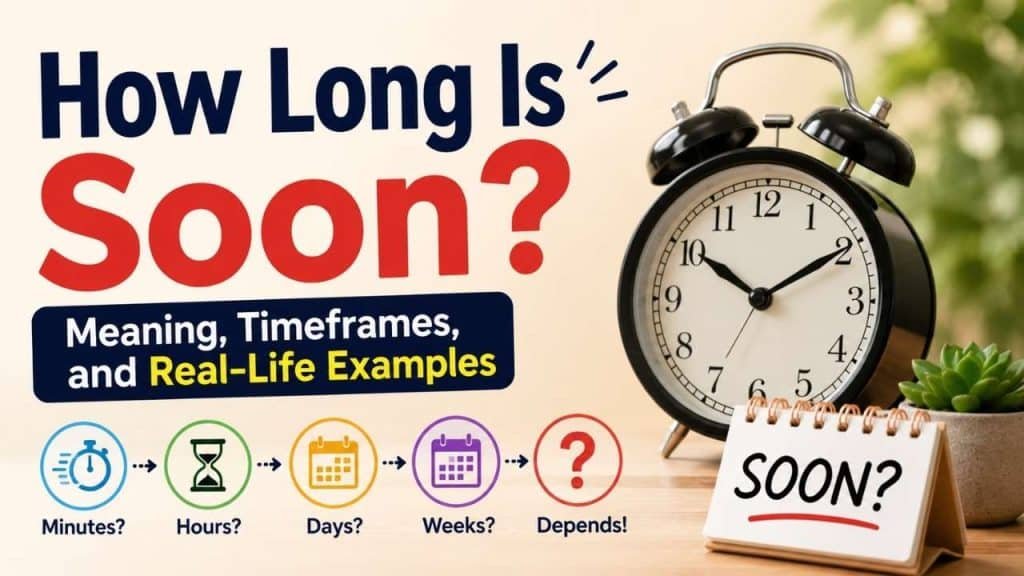

Have you ever wondered, “How long is soon?” Someone says, “I’ll be there soon,” “I’ll get back to you soon,” or “The product is coming soon,” but they never mention an exact time. This leaves many people asking, what does soon mean, and does it have a specific timeframe?
The truth is that soon meaning depends on the situation. There is no universal clock that tells us exactly how soon is soon. In some cases, it may mean a few minutes. In others, it could mean several days, weeks, or even months. Because of this flexibility, the word often creates different expectations among people.
Understanding the meaning of soon can help you avoid confusion in conversations, workplace communication, relationships, and everyday situations. In this guide, you’ll learn the soon definition, discover common timeframes, explore real-life examples, and understand why people use this vague but popular time expression.
Quick Answer
Soon does not have a fixed timeframe. It generally means something will happen in the near future, but the exact timing depends on the situation. In everyday conversations, soon may mean a few minutes or hours, while in business, projects, or product launches, it can mean days, weeks, or even months. Context determines the true meaning of soon.
What Does “Soon” Mean?

The word soon generally means a short time from now or before long. However, the exact amount of time remains unclear because the word acts as a relative time expression rather than a precise measurement. This is why people often ask, how long does soon mean or what is considered soon.
In everyday English, people use soon when they expect something to happen in the near future but do not want to provide an exact deadline. For example, if a friend says, “I’ll call you soon,” they usually mean they plan to call in the near future, but they may not know the exact time yet.
The interpretation of soon changes according to context. A waiter saying your food will arrive soon may mean ten minutes, while a company announcing a new feature coming soon could mean several months. This flexibility makes understanding soon important in both personal and professional communication.
Why Soon Does Not Have an Exact Time Limit
One reason people struggle with the time meaning of soon is that the word has no fixed duration. Unlike terms such as five minutes, one day, or next week, soon leaves room for interpretation. This makes it one of the most common vague time expressions in English.
People often use soon when circumstances remain uncertain. They may not know the exact timing, or they may want to keep their schedule flexible. As a result, the expected timeframe varies from one situation to another.
The meaning also depends on the event itself. If your food is cooking, soon may mean a few minutes. If a business is developing new software, soon may refer to weeks or months. This explains why how long is soon exactly has no single answer.
Instead of focusing on a specific number, focus on the context, urgency, and situation. These factors provide the best clues for determining what people really mean when they use the word soon.
How Long Is Soon Exactly?
The short answer is simple: soon has no fixed timeframe. If you ask ten different people, “How long is soon?” you may receive ten different answers. That is because the word depends heavily on context, expectations, and circumstances.
For example, if someone says they will arrive soon, you might expect them within minutes. If a company says a new product is coming soon, you might expect a launch within weeks or months. This difference shows why how soon is soon remains one of the most subjective questions in everyday communication.
The best way to understand the soon timeframe is to consider the activity involved. Small tasks usually require less time, while larger projects naturally take longer. Instead of searching for an exact number, look at the situation itself.
In most cases, people use soon to describe something they expect to happen in the near future without providing a precise deadline.
Typical Timeframes for “Soon” in Different Situations
The meaning of soon in conversation often changes depending on the context. The table below shows how people commonly interpret the word.
| Situation | Typical Meaning of Soon |
| Text Message | A few minutes to several hours |
| Meeting a Friend | 10–60 minutes |
| Workplace Task | Hours to a few days |
| Customer Support Reply | 1–7 days |
| Package Delivery | Same day to several days |
| Product Launch | Weeks to months |
| Large Business Project | Months or longer |
Soon in Text Messages
When people use soon in text messages, they usually mean a relatively short wait. A reply may arrive within minutes or later that day. However, texting habits vary from person to person.
Soon at Work
In professional communication, soon at work often means a task will be completed within a reasonable timeframe. Depending on the project, this could mean hours, days, or weeks.
Soon in Relationships
When someone says, “I’ll call you soon” or “Let’s meet soon,” the meaning depends on both the relationship and individual expectations. This explains why misunderstandings sometimes occur.
Why Is the Word “Soon” So Vague?
The word soon creates uncertainty because it lacks clear boundaries. Unlike exact dates or times, it allows people to define the timeframe based on their own interpretation.
One reason for this ambiguity is that everyone experiences time differently. A customer waiting for a refund may consider three days a long wait, while a business may view it as a quick turnaround.
Another factor is personal expectation. Some people hear the word soon and think of minutes, while others think of days. This difference often leads to confusion in conversations.
The relative time expression soon works because it provides flexibility. However, that same flexibility can also create misunderstandings. This is why many communication experts recommend using specific dates and times whenever possible.
Understanding the context of soon helps reduce confusion and improves communication in both personal and professional settings.
Why People Use the Word “Soon” Instead of Giving Exact Times
People often use soon because they do not know exactly when something will happen. Instead of making a promise they cannot keep, they choose a flexible expression.
In many situations, soon helps speakers avoid unnecessary pressure. A manager may say a report will be ready soon because the completion date remains uncertain. Similarly, customer service representatives often use soon when they are waiting for updates.
Some people also use soon as a polite communication tool. Rather than saying “I don’t know,” they provide reassurance that progress is happening.
Another reason involves changing circumstances. Unexpected delays can affect projects, deliveries, meetings, and responses. Using soon allows people to acknowledge future action without committing to an exact schedule.
Although the word offers flexibility, it works best when listeners understand the surrounding context and expected timeframe.
How to Interpret “Soon” Correctly
If you want to understand what someone means by soon, focus on the situation rather than the word itself.
First, consider the type of activity. Small tasks usually require less time than large projects. If someone says they will send a document soon, you may expect it within hours. If they mention a software update coming soon, the timeline may be much longer.
Second, evaluate the person’s communication habits. Some people use soon conservatively, while others use it very loosely.
Third, consider urgency. A restaurant preparing food operates on a different timeline than a company developing a new product.
If the timeframe matters, ask a follow-up question. Instead of assuming, politely request clarification. This simple step helps avoid misunderstandings and improves communication expectations.
Real-Life Examples of “Soon”
People use soon in many everyday situations. Understanding these examples can help you interpret the word more accurately.
“I’ll Be There Soon” often means the person expects to arrive within a short period, usually minutes rather than days.
“I’ll Get Back to You Soon” commonly appears in emails and workplace communication. Depending on the workload, the response may arrive within hours or several days.
“Coming Soon” appears frequently in advertising and marketing. In this context, the timeframe can range from days to months.
“Talk to You Soon” generally expresses an intention to communicate again in the near future but without a specific schedule.
“See You Soon” often serves as a friendly farewell and may not refer to an exact timeframe at all.
These examples show why the interpretation of soon depends heavily on context and speaker intent.
Does “Soon” Mean Minutes, Hours, Days, or Weeks?
The answer is yes—it can mean any of these timeframes.
When Soon Means Minutes
Food preparation, transportation, and face-to-face meetings often use soon to mean a matter of minutes.
When Soon Means Hours
Text messages, emails, and routine workplace tasks commonly fall into this category.
When Soon Means Days
Customer support responses, document reviews, and business approvals may require several days.
When Soon Means Weeks or Months
Large projects, product launches, hiring decisions, and software development frequently use soon to describe longer periods.
Because soon meaning changes with context, there is no universal duration. The task itself usually determines the timeframe.
Soon vs Other Time Expressions
Understanding similar expressions can help clarify the meaning of soon.
Soon vs Shortly
Both words suggest something will happen in the near future. However, shortly often sounds slightly more precise and immediate.
Soon vs Later
Soon suggests a relatively near timeframe, while later can refer to almost any point in the future.
Soon vs Immediately
Immediately means without delay. Soon allows for some waiting time.
Soon vs Eventually
Eventually suggests a longer and less predictable timeframe than soon.
These comparisons help readers understand the subtle differences between common time-related expressions in English.
Common Misunderstandings About the Word “Soon”
Many communication problems begin when people assume everyone shares the same definition of soon.
One common mistake involves expecting a specific timeframe when none was provided. Another occurs when people interpret soon according to their personal expectations rather than the speaker’s intent.
Relationships often experience misunderstandings because one person expects contact within hours while the other thinks a few days is reasonable.
The workplace presents similar challenges. Employees, managers, and clients may all interpret the word differently.
Clear communication reduces these problems. Whenever timing matters, replacing soon with a specific date, deadline, or estimated timeframe helps everyone stay aligned.
How Different Industries Use the Word “Soon”
Different industries use soon in unique ways.
In marketing, phrases such as “coming soon” build anticipation and excitement before a launch.
In technology, developers often use soon when software updates remain under development and exact release dates are unavailable.
In customer support, representatives may use soon when waiting for information from another department.
In project management, soon can describe milestones that are approaching but not yet finalized.
Because every industry operates on different schedules, the expected timeframe associated with soon also changes. Understanding the industry context helps readers interpret the term more accurately.
Alternatives to Saying “Soon”
If you want to communicate more clearly, consider replacing soon with a specific timeframe.
Instead of saying:
- I’ll call you soon.
Say:
- I’ll call you this afternoon.
Instead of saying:
- The update is coming soon.
Say:
- The update will launch next week.
Professional communication benefits from clarity. Specific deadlines improve trust, reduce uncertainty, and help people plan effectively.
When exact timing remains uncertain, estimated timeframes such as “within two days” or “by the end of the week” often work better than soon.
FAQs
Does Soon Mean Today?
Not always. Soon may mean today in some situations, but it can also refer to a longer timeframe depending on context.
Can Soon Mean Tomorrow?
Yes. Many people use soon when referring to something expected tomorrow or within the next few days.
Can Soon Mean Weeks?
Yes. Product launches, hiring decisions, and major projects often use soon to describe periods lasting several weeks.
Is Soon Longer Than Shortly?
Generally, shortly sounds slightly more immediate and specific than soon.
How Long Should I Wait If Someone Says Soon?
The answer depends on the situation. Consider the task, urgency, and previous communication patterns before forming expectations.
Is Soon a Vague Word?
Yes. Soon is a flexible and subjective expression that depends heavily on context.
Conclusion
So, how long is soon? The simple answer is that there is no exact timeframe. The meaning of soon depends on context, expectations, urgency, and the situation involved. In some cases, soon means minutes. In others, it may mean days, weeks, or even months.
Instead of searching for a universal definition, focus on the circumstances surrounding the statement. Understanding the soon definition, recognizing the context of soon, and asking for clarification when necessary can help prevent misunderstandings.
The next time someone says they will do something soon, remember that the word describes a general expectation rather than a precise deadline.