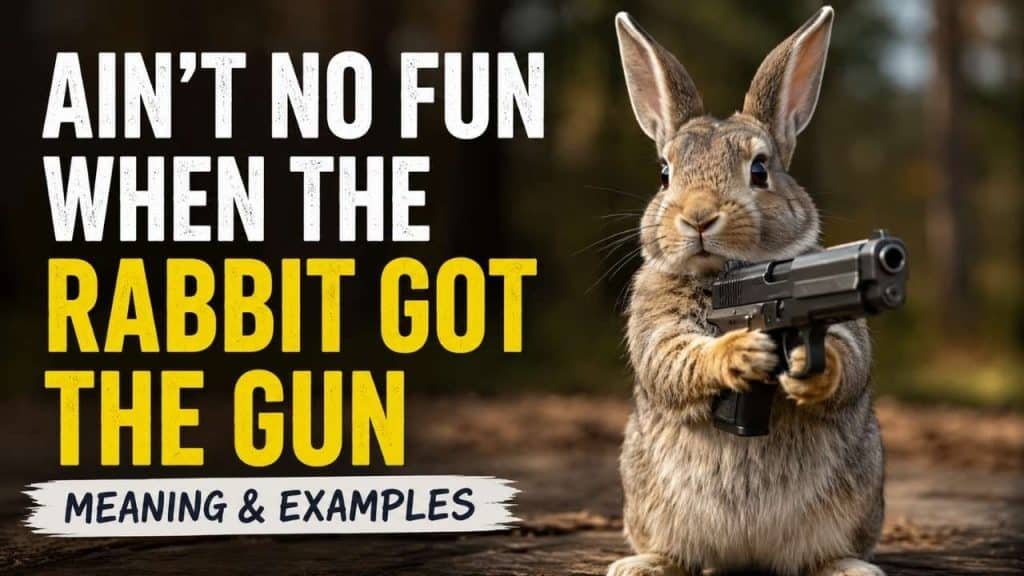

Have you ever heard someone say, “ain’t no fun when the rabbit got the gun” and wondered what they meant? This popular idiom describes a situation where the person who once had little or no power suddenly gains control. In simple terms, it refers to a power reversal or role reversal where the underdog ends up with the advantage.
The phrase often appears when the tables have turned and someone experiences the same treatment they once gave to others. Because of this, people frequently connect the expression with justice, karma, accountability, and the idea of getting a taste of your own medicine. It highlights how quickly a shift in power can change a situation.
If you have ever asked, “What does ain’t no fun when the rabbit got the gun mean?”, this guide will give you a clear answer. You will learn the rabbit got the gun meaning, explore its possible origin, understand its symbolism, and discover examples that show how this common saying works in everyday conversations.
Quick Answer
“Ain’t no fun when the rabbit got the gun” means that a person who was once weak, disadvantaged, or powerless suddenly gains power and control. This idiom describes a role reversal where the tables have turned, and the former underdog now has the upper hand. People often use the phrase to highlight karma, justice, or a situation where someone experiences the same treatment they once gave to others.
What Does “Ain’t No Fun When The Rabbit Got The Gun” Mean?
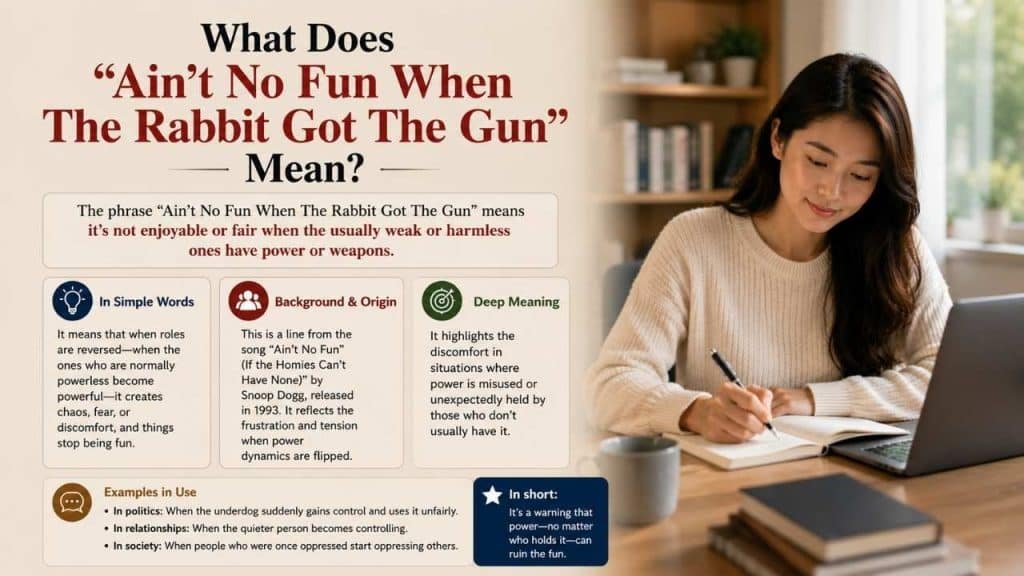
The rabbit got the gun meaning centers on a sudden reversal of power. The phrase “ain’t no fun when the rabbit got the gun” describes a situation where someone who was once weak, overlooked, or disadvantaged gains authority and control. As a result, the people who previously held the advantage often feel uncomfortable when they experience the same treatment they once gave others.
In a literal sense, the image sounds unusual because rabbits are typically seen as prey rather than powerful animals. However, the phrase uses figurative language and symbolism rather than a real-life scenario. The rabbit represents the underdog, while the gun symbolizes power, influence, and control.
People often use this common saying when the tables have turned, the hunter becomes the hunted, or a former victim gains leverage. The expression can suggest justice, karma, accountability, or simply an unexpected shift in power that changes the balance between people.
Why Is the Rabbit Holding the Gun?
The phrase becomes powerful because of its unusual imagery. In most stories, a rabbit represents a weak, vulnerable, or disadvantaged character. People often see rabbits as prey animals that avoid conflict rather than control it. A gun, on the other hand, symbolizes power, authority, protection, and the ability to influence outcomes. When the rabbit suddenly holds the gun, the normal order changes.
This symbolism creates an instant picture of an unexpected power reversal. The person who once lacked influence now possesses the advantage. The former underdog gains leverage, while those who once enjoyed control lose their comfortable position. That is why the expression resonates with so many people.
The image also explains why the tables have turned. Instead of the strong controlling the weak, the weak now controls the situation. This dramatic shift in power forms the heart of the phrase and helps explain its lasting popularity.
Understanding the Power Reversal in the Phrase
At its core, “ain’t no fun when the rabbit got the gun” highlights how people react when power changes hands. Many individuals enjoy situations where they hold authority, make decisions, or influence others. However, they often feel differently when they lose that advantage.
The phrase describes a moment when the underdog gains power and the previous leader, bully, or authority figure must adapt to a new reality. This role reversal can happen in friendships, workplaces, sports, politics, or family relationships. Suddenly, the person who once controlled events no longer sets the rules.
People frequently connect this expression to justice, fairness, and accountability. Others view it as a form of karma or a taste of your own medicine. Regardless of the situation, the saying reminds us that power rarely stays in one place forever. A change in circumstances can quickly transform winners into losers and followers into leaders.
Origin of “Ain’t No Fun When The Rabbit Got The Gun”
The exact origin of “ain’t no fun when the rabbit got the gun” remains uncertain. Unlike some well-documented idioms, this expression does not have a clearly identified creator or historical source. However, the phrase has circulated in spoken English for many years and has appeared in conversations, songs, popular culture, and online discussions.
Many language researchers believe the saying grew from traditional imagery involving hunters and prey. Since rabbits are commonly hunted animals, placing a gun in a rabbit’s hands instantly creates a memorable picture of reversed roles. This symbolism makes the message easy to understand.
Over time, people began using the phrase to describe situations involving power dynamics, reversal of roles, and unexpected changes in authority. Although its precise history remains unclear, the expression continues to thrive because its meaning feels universal. Almost everyone has experienced a moment when the balance of power suddenly shifted.
When Do People Use This Expression?
People use “ain’t no fun when the rabbit got the gun” whenever an unexpected change in authority occurs. The phrase works especially well when someone who once held power finds themselves on the receiving end of the same treatment they previously gave others.
In the workplace, employees might use it when a former supervisor loses influence or when a team member gains authority. In friendships, people often say it after a prankster becomes the target of a prank. Families may use the expression when children grow older and begin challenging rules they once accepted without question.
The phrase also appears in sports, politics, and social situations where the hunter becomes the hunted. Because it highlights role reversal, justice, and accountability, it remains useful across many different contexts. Whenever the tables have turned, this saying often captures the situation perfectly.
Examples of “Ain’t No Fun When The Rabbit Got The Gun”
The best way to understand “ain’t no fun when the rabbit got the gun” is to see it in real-life situations. Imagine a manager who constantly criticizes employees. Later, a new executive reviews the manager’s performance with the same level of scrutiny. A coworker might say, “It ain’t no fun when the rabbit got the gun.”
The phrase also works in relationships. For example, someone who often ignores messages may become frustrated when their partner starts doing the same thing. In sports, a team that usually dominates its opponents may struggle against a former underdog that has improved significantly. Friends may use the expression when a prankster becomes the target of a prank.
In every example, the common theme is a role reversal. The person who once had the advantage loses it, while the former underdog gains power, confidence, or control.
Is the Phrase Positive or Negative?
The answer depends on the situation. Sometimes “ain’t no fun when the rabbit got the gun” carries a positive message because it highlights justice, fairness, and accountability. People often use it when someone finally faces the consequences of their actions. In these situations, the phrase suggests that balance has been restored.
However, the expression can also sound sarcastic or critical. A speaker may use it to point out hypocrisy when someone complains after experiencing the same treatment they once gave others. The phrase does not always celebrate revenge. Instead, it often emphasizes perspective and understanding.
Many people also connect the saying with karma. When events unexpectedly reverse and the powerful lose their advantage, observers may view the outcome as a natural consequence of earlier behavior. Whether positive or negative, the phrase always focuses on a significant shift in power and changing circumstances.
The Psychology Behind the Phrase
The popularity of this expression comes from basic human psychology. Most people enjoy having control over situations. When individuals possess authority, influence, or social status, they often feel comfortable and confident. Problems arise when those advantages disappear.
“Ain’t no fun when the rabbit got the gun” reflects the discomfort people feel during a sudden reversal of power. Someone who once controlled events may struggle when another person gains authority. This reaction often reveals how strongly people value status and influence.
The phrase also teaches an important lesson about empathy. When individuals experience the same challenges they once imposed on others, they often develop a better understanding of different perspectives. That is why the saying frequently appears in conversations about fairness, accountability, and personal growth. It reminds us that circumstances can change quickly and that treating others with respect remains important regardless of our current position.
Similar Expressions and Idioms
Many English expressions share a similar meaning with “ain’t no fun when the rabbit got the gun.” One of the most common is “the tables have turned.” Both phrases describe a situation where power shifts from one person or group to another.
Another related saying is “taste of your own medicine.” This expression refers to receiving the same treatment you previously gave someone else. “Turnabout is fair play” also emphasizes fairness and role reversal. Likewise, “what goes around comes around” highlights the idea of karma and consequences.
People sometimes use “the hunter becomes the hunted” to describe dramatic changes in authority or influence. Each of these expressions focuses on changing circumstances and shifting power dynamics. While the wording differs, they all communicate the same central message: no advantage lasts forever, and today’s underdog may become tomorrow’s leader.
Common Misunderstandings About the Phrase
Some people misunderstand “ain’t no fun when the rabbit got the gun” because they interpret it literally. The phrase does not refer to actual rabbits or firearms. Instead, it uses symbolism to illustrate a change in power and authority.
Another common misunderstanding is that the expression always promotes revenge. In reality, the phrase often focuses on fairness, accountability, and perspective rather than retaliation. It highlights what happens when people experience the consequences of their actions or when circumstances suddenly change.
Others assume the saying only applies to serious conflicts. However, people frequently use it in lighthearted situations involving sports, workplace competition, family disagreements, and friendly jokes. The expression works whenever a former underdog gains an advantage.
Understanding these nuances helps readers appreciate the phrase’s broader meaning. At its heart, the saying explores power dynamics, role changes, and the lessons people learn when the tables have turned.
Is “Ain’t No Fun When The Rabbit Got The Gun” an Idiom, Slang, or Proverb?
The phrase shares characteristics with several forms of figurative language. Most language experts would classify it as an idiom because its meaning differs from the literal words used in the expression. The image of a rabbit carrying a gun symbolizes a situation rather than describing a real event.
Some people also view it as a form of slang expression because speakers often use it in informal conversations. The wording feels casual, conversational, and memorable, which contributes to its popularity.
At the same time, the saying resembles a proverb because it communicates a broader lesson about human behavior, authority, and consequences. It teaches that power can change hands unexpectedly and that people often react differently when they lose their advantage.
For practical purposes, most readers can think of it as an idiomatic expression that conveys a powerful message about role reversal, fairness, and shifting power dynamics.
FAQs
What does “ain’t no fun when the rabbit got the gun” mean?
It means the underdog gains power, and the person who once had control loses their advantage.
Is “ain’t no fun when the rabbit got the gun” an idiom?
Yes, it is an idiom that uses figurative language to describe a role reversal.
Where did the phrase come from?
Its exact origin is unknown, but it likely developed from the idea of a prey animal unexpectedly gaining power.
Why is the rabbit holding the gun?
The rabbit represents the underdog, while the gun symbolizes power, authority, and control.
When should you use this expression?
Use it when the tables have turned and someone who was once powerless gains the upper hand.
Is the phrase positive or negative?
It can be either. People use it to express justice, karma, sarcasm, or accountability.
What are some similar expressions?
Similar phrases include “the tables have turned,” “taste of your own medicine,” and “the hunter becomes the hunted.”
Is the phrase still commonly used?
Yes, many people use it in conversations, social media, and popular culture to describe a shift in power.
Conclusion
“Ain’t no fun when the rabbit got the gun” remains popular because it captures a universal truth about life. Power, influence, and authority rarely stay in one place forever. Circumstances change, roles shift, and the people who once held the advantage may eventually find themselves in a very different position.
The expression uses simple but memorable symbolism to explain complex ideas about justice, karma, empathy, accountability, and human behavior. Whether it appears in everyday conversations, workplace discussions, sports, or relationships, the message remains the same: a sudden reversal of power often changes how people view a situation.
By understanding the rabbit got the gun meaning, readers gain more than a definition. They also learn an important lesson about perspective and respect. Today’s underdog may become tomorrow’s leader, which is exactly why the tables have turned remains such a powerful concept in language and life.