Alliteration vs Consonance are two important literary devices used in English writing and poetry to create sound repetition and improve the rhythm of sentences. These concepts are often confused by students, but they are actually easy to understand with the right explanation.
Alliteration is the repetition of the same starting consonant sound in nearby words, while consonance is the repetition of consonant sounds anywhere in a word, not just at the beginning. For example, in “bright blue balloon”, the repeated b sound shows alliteration. In “blank and think”, the repeated k sound at the end shows consonance.
Understanding the difference between alliteration and consonance with examples helps improve writing, reading comprehension, and grammar skills. In this guide, you will learn simple definitions, clear examples, and easy tricks to remember both concepts quickly for exams and daily English use.
Quick Answer
Alliteration vs Consonance are two literary devices based on sound repetition. Alliteration repeats the same consonant sound at the beginning of nearby words, while consonance repeats consonant sounds anywhere in words. Example: “big blue ball” is alliteration, and “blank think” shows consonance. Both are used in poetry to create rhythm and improve writing style.
What is Alliteration?
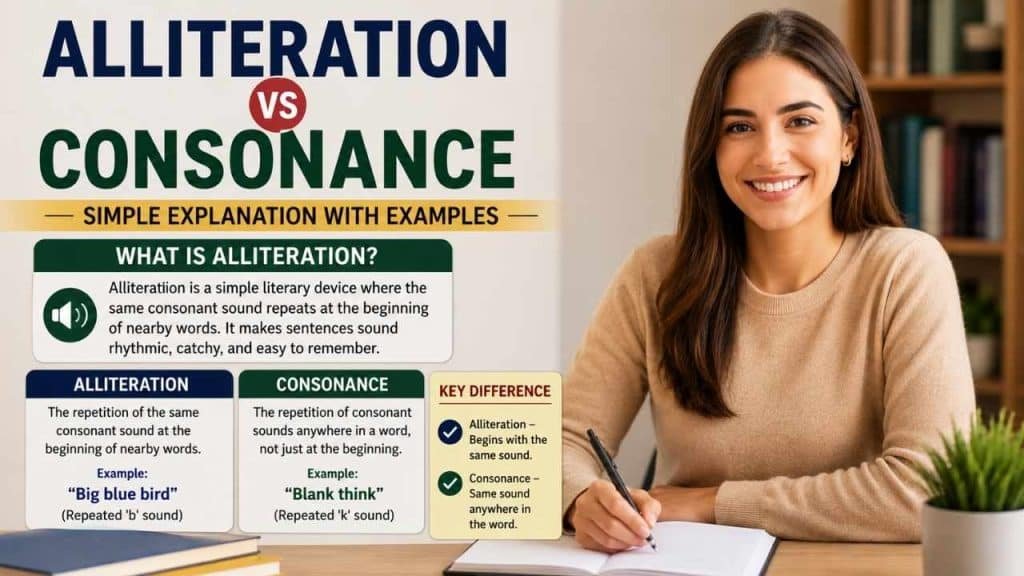
Alliteration is a simple literary device where the same consonant sound repeats at the beginning of nearby words. It does not depend on spelling; it depends on sound. Writers use alliteration to make sentences more rhythmic, catchy, and easy to remember. It is common in poetry, tongue twisters, and even brand names.
For example:
- “She sells sea shells”
- “Big blue bird”
- “Daily data drive”
In all these examples, the starting sound is repeated, creating a smooth flow. Alliteration is often used in poetic devices to improve reading experience and add musical quality to language. It also helps in language learning because repeated sounds are easier to remember. Students often see alliteration in exams when asked about sound-based literary devices. It is one of the most basic and widely used techniques in English writing.
What is Consonance?
Consonance is a simple literary device where the same consonant sound repeats anywhere in a word, not just at the start. It can appear in the middle or at the end of words. Writers use consonance to create rhythm, flow, and sound balance in sentences. It is common in poetry and creative writing because it makes language more smooth and expressive.
For example:
- “Like and break”
- “Pipes and deep”
- “Blank think”
In these examples, the repeated consonant sound appears in different positions, not only at the beginning. This is what makes consonance different from alliteration. Consonance is often used in poetic devices to add musical effect and improve writing style. It also helps readers enjoy the sound pattern in sentences. Students often study consonance in English grammar lessons and exams because it is a key part of sound-based literary devices.
Alliteration vs Consonance (Key Differences)
Alliteration and consonance are both sound-based literary devices, but they work in different ways. Alliteration repeats the same consonant sound at the beginning of words, while consonance repeats consonant sounds anywhere in the word. Both are used in poetry and writing to create rhythm and improve flow.
In alliteration, the focus is on the starting sound, such as “big blue bird.” In consonance, the sound can appear in the middle or end, such as “like and break.” This difference helps writers choose the right effect for their sentences. Alliteration sounds more strong and noticeable, while consonance sounds more soft and natural.
Understanding the difference between alliteration and consonance with examples helps students improve grammar skills, reading comprehension, and creative writing. Both are important poetic devices used in literature and exams.
Comparison Table
| Feature | Alliteration | Consonance |
| Type | Sound repetition | Sound repetition |
| Position | Beginning of words | Anywhere in words |
| Sound | Consonant sound | Consonant sound |
| Example | “Big blue ball” | “Blank think” |
| Effect | Strong rhythm | Smooth flow |
Real-Life Examples
In daily English, both alliteration and consonance are widely used. In workplaces, alliteration is often seen in brand names and slogans like “Best Buy” or “PayPal.” These make names easier to remember. In emails or office communication, consonance can appear in phrases like “quick check” or “final plan,” making sentences sound smooth and natural.
In schools, teachers use examples like “Peter picked peppers” to explain alliteration. Students also see consonance in poetry and reading passages where sound patterns improve rhythm. In advertising, both devices help create catchy lines that attract attention. For example, slogans often use repeated sounds to stay in memory. Understanding alliteration vs consonance helps learners improve both speaking and writing skills in real-life English situations.
Common Mistakes to Avoid
Many students confuse alliteration and consonance because both use sound repetition. A common mistake is thinking they are the same thing. For example, in the sentence “big blue bird,” students may incorrectly label consonance instead of alliteration. This is wrong because the sound repeats at the beginning.
Another mistake is focusing on spelling instead of sound. For example, “knight” and “night” sound the same but are spelled differently. Students should always listen to pronunciation, not letters. A correct understanding is: alliteration = start sound, and consonance = anywhere sound. Avoid mixing them with assonance, which uses vowel sounds. Practicing examples regularly helps prevent these mistakes in exams and writing tasks.
Memory Trick / Shortcut
A simple trick to remember alliteration vs consonance is:
👉 A = Action (Beginning sound)
👉 C = Carry (Anywhere sound)
So, Alliteration = start of words, and Consonance = carries through words. Another easy way is to think: alliteration is like a strong “first sound punch,” while consonance is a smooth background sound. This trick helps students quickly identify the difference in exams and reading tasks. Using this method makes learning literary devices faster and easier without confusion.
FAQs
Is consonance a type of alliteration?
No, consonance is different. It repeats consonant sounds anywhere in words, while alliteration only uses the beginning sound.
Can alliteration and consonance appear in the same sentence?
Yes, both can appear together in poetry or writing for better rhythm and style.
Which is easier to identify?
Alliteration is easier because the sound is at the start of words and more noticeable.
Why are these used in writing?
They make sentences more rhythmic, memorable, and pleasant to read.
Are these used in daily English?
Yes, especially in advertising, slogans, and creative writing.
Conclusion
In simple terms, alliteration vs consonance are two important sound-based literary devices that improve the beauty and rhythm of English writing. Alliteration focuses on repeating the same consonant sound at the beginning of nearby words, while consonance repeats consonant sounds anywhere in the words, such as middle or end.
Both are widely used in poetry, creative writing, and everyday language to make sentences more engaging and memorable. Understanding the difference between alliteration and consonance with examples helps students avoid confusion in exams and improve writing skills. With a little practice, you can easily identify both devices in sentences and use them effectively in your own writing.