Many writers feel confused about ageing or aging because both spellings appear online, in books, and even in professional writing. The difference mainly comes from British English and American English spelling rules. In the UK, people usually write ageing, while in the US, aging is the preferred spelling. Both forms are correct, but the right choice depends on your audience and writing style.
Understanding the difference between aging vs ageing helps you avoid grammar confusion and keep your writing consistent. This guide explains the spelling difference, shows real examples, and answers common questions like “Is ageing correct?” and “Why is aging spelled without an e?” You will also learn which spelling works better for blogs, academic writing, and international SEO content.
Quick Answer
Aging is the preferred spelling in American English, while ageing is common in British English. Both words mean the same thing and describe the process of growing older. The spelling difference comes from regional English rules, not grammar mistakes. If you write for a US audience, use aging. If you write for a UK audience, use ageing. Keeping one spelling style throughout your article helps your writing look professional and clear. Many style guides, including AP Style, prefer aging for American publications and online content.
What Is the Difference Between Ageing and Aging?
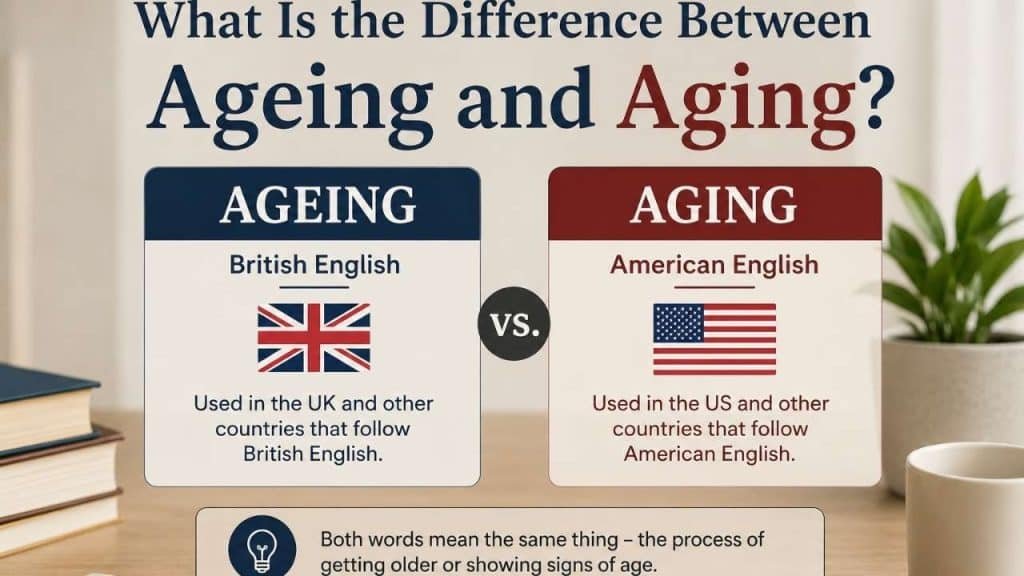
The difference between ageing and aging is mostly about location and writing style. In British English, writers usually keep the extra “e” and spell the word as ageing. In American English, writers remove the “e” and use aging instead. Both spellings are grammatically correct, and both have the same meaning. They describe the process of getting older or showing signs of age.
Many people become confused because spellcheck tools often flag ageing as incorrect in US English settings. However, that does not mean the word is wrong. It only means the software follows American spelling rules. Understanding this spelling variation helps writers choose the correct version for blogs, academic writing, business websites, and international SEO content.
Meaning of Ageing
Ageing is the standard spelling used in British English. The word describes the natural process of growing older over time. People often use it when talking about humans, skin, health, buildings, or even technology. Many UK newspapers, schools, and publications prefer this spelling because it follows traditional British writing standards.
Examples of ageing in sentences:
- The company studied the effects of an ageing population.
- Her skin showed normal signs of ageing.
- The city plans to repair its ageing infrastructure.
Many English learners think ageing is incorrect because American spellcheck systems flag it. However, major British dictionaries, including the Oxford English Dictionary, accept and use this spelling. If your audience lives in the UK or follows British English, ageing is the correct choice.
Meaning of Aging
Aging is the preferred spelling in American English. It has the same meaning as ageing and describes the process of getting older or becoming less new over time. American newspapers, websites, schools, and style guides usually use this spelling. The popular AP Stylebook also recommends aging for US writing.
Examples of aging in sentences:
- Scientists continue to study the aging process.
- The company helps workers manage an aging workforce.
- Many people buy products that claim to reduce aging signs.
American English often removes the silent “e” before adding “-ing.” That is why writers use aging instead of ageing in the US. If you write for American readers, blogs, or SEO content, aging is usually the better spelling choice.
Why Does American English Drop the “E” in Aging?
Many people ask, “Why is aging spelled without an e?” The answer comes from a common American spelling rule. In American English, writers often remove a silent “e” before adding “-ing” to a word. This pattern appears in many common verbs and helps simplify spelling.
For example:
- age → aging
- love → loving
- hope → hoping
- make → making
American English prefers shorter and simpler spelling forms in many situations. British English sometimes keeps older spelling patterns, which is why people still use ageing in the UK. Both versions remain correct because they follow different regional writing standards. Understanding this grammar pattern helps writers avoid confusion and choose the right spelling for their audience and content style.
Ageing vs Aging Comparison Table
| Feature | Ageing | Aging |
| Main Region | British English | American English |
| Correct Spelling | Yes | Yes |
| Common in UK | Very Common | Less Common |
| Common in US | Rare | Very Common |
| AP Style | Not Preferred | Preferred |
| Oxford English | Common | Accepted |
| Meaning | Growing older | Growing older |
This ageing vs aging comparison table makes the spelling difference easier to understand. Both words have the same meaning, but writers choose one based on their audience and regional writing style. If your content targets American readers or follows AP Style, use aging. If your audience lives in the UK or follows British English rules, use ageing instead. The most important thing is to stay consistent throughout your writing.
Real-Life Examples of Ageing and Aging
People use both ageing and aging in daily writing, news articles, healthcare discussions, and online content. The spelling usually depends on the country and writing style. British websites often use ageing, while American blogs and businesses prefer aging.
British English examples:
- The government discussed problems caused by an ageing population.
- Many people worry about ageing skin and health issues.
American English examples:
- Researchers continue to study the aging process.
- The company created products for people with aging concerns.
You may also see different spellings in global brands, academic papers, and SEO articles. Writers should match the spelling to their audience. Using the correct regional spelling helps content look more professional, clear, and trustworthy.
Common Mistakes to Avoid
Many writers make simple mistakes when using ageing or aging. The most common problem is mixing both spellings in the same article. For example, a blog may start with aging and later switch to ageing. This inconsistency makes writing look unprofessional and may confuse readers.
Wrong example
The company studies aging problems in the UK and supports healthy ageing programs.
Correct example
The company studies aging problems in the US and supports healthy aging programs.
Another mistake happens when writers trust spellcheck tools too much. Some tools automatically change ageing to aging because they use American English settings. Always choose the spelling that matches your audience, style guide, and region. Consistency improves readability, SEO clarity, and overall writing quality.
Easy Memory Trick to Remember the Difference
A simple memory trick can help you remember the difference between ageing and aging. Think about the location where the word appears. The spelling with the extra “e” — ageing — is common in England and other countries that follow British English. Both words contain the letter “e,” which makes the connection easier to remember.
For aging, think about American English, which often prefers shorter spellings. Americans remove the silent “e” in many words before adding “-ing.” That is why they write aging instead of ageing.
Quick memory tip:
- Ageing = England
- Aging = America
This small trick helps students, bloggers, and English learners avoid spelling confusion. It also makes your writing more consistent and professional for your target audience.
FAQs
Is ageing correct?
Yes, ageing is correct in British English. Many UK publications and dictionaries use this spelling.
Is aging correct?
Yes, aging is correct in American English and appears in most US writing styles.
Why is aging spelled without an e?
American English usually removes silent “e” before adding “-ing” to words.
Which spelling should bloggers use?
Use the spelling that matches your audience. US blogs usually prefer aging.
Is ageing wrong in American English?
It is not wrong, but it looks uncommon because Americans normally use aging.
Which spelling is better for SEO?
For international SEO, aging often has higher search volume, especially in the US.
Conclusion
The difference between ageing and aging comes from British English and American English spelling rules. Both words are correct and have the same meaning, but writers choose one based on their audience and writing style. British publications usually prefer ageing, while American websites and style guides use aging.
If you create blogs, academic content, or SEO articles, always keep your spelling consistent. Using the correct regional spelling improves readability and helps your content look professional. Many online writers now prefer aging because it matches American search trends and SEO traffic. However, ageing remains the standard choice in British English. The best option depends on who reads your content and where your audience lives.