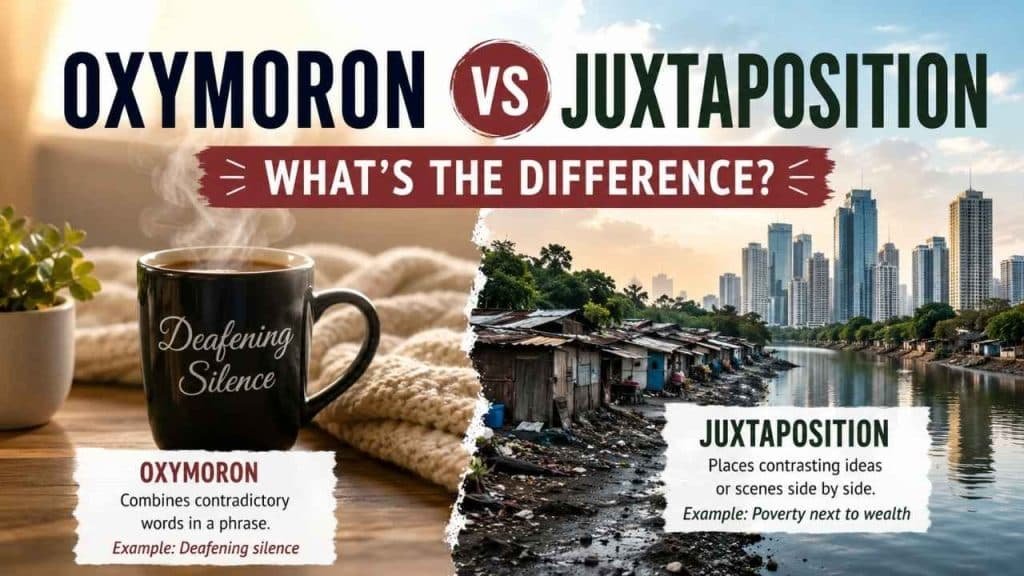

Many people confuse oxymoron vs juxtaposition because both literary devices use contrast in literature. However, they work in different ways. An oxymoron combines contradictory words in a single phrase, such as “deafening silence” or “bittersweet.” In contrast, juxtaposition places contrasting ideas or images side by side to highlight differences.
Writers often use these figurative language techniques to create emotion, tension, or deeper meaning. Understanding the difference between oxymoron and juxtaposition helps students, writers, and readers identify these common literary devices more easily.
While an oxymoron focuses on a small phrase-level contradiction, juxtaposition usually compares larger ideas, characters, or themes. In this guide, you will learn simple definitions, real examples, and practical tips to understand juxtaposition vs oxymoron without confusion.
Quick Answer: Oxymoron vs Juxtaposition
The main difference between oxymoron and juxtaposition is how they show contrast. An oxymoron combines contradictory words in one phrase, such as “deafening silence.” In contrast, juxtaposition places opposite ideas, characters, or scenes side by side. Both are common literary devices, but oxymorons focus on phrases, while juxtaposition focuses on broader comparisons in literature and storytelling.
Oxymoron vs Juxtaposition Comparison Table

Both oxymoron and juxtaposition rely on contrast, but they create meaning in different ways. An oxymoron combines opposite terms in a single phrase, while juxtaposition compares larger ideas or images placed close together.
This simple comparison helps readers understand juxtaposition vs oxymoron more clearly. Writers use these literary techniques to add emotion, tension, and deeper meaning to their work. For example, “sweet sorrow” is an oxymoron because the contradictory words appear together. In contrast, showing a peaceful village beside a dangerous battlefield creates juxtaposition because two opposite scenes appear side by side.
Many students confuse these figurative language devices because both involve contrast. However, the scale of comparison makes the biggest difference. Oxymorons work at phrase level, while juxtaposition works at idea or theme level in literature and storytelling.
What Is an Oxymoron?
An oxymoron is a type of figurative language that joins two opposite or contradictory words together in one phrase. Writers use oxymorons to create surprise, humor, or strong emotion. Common oxymoron examples include “deafening silence,” “bittersweet,” and “open secret.” Even though the words seem opposite, they work together to create a deeper meaning.
This is why oxymorons remain popular in poetry, novels, movies, and everyday speech. In literature, writers use oxymorons to make readers pause and think carefully about a situation or feeling. Unlike juxtaposition, which compares larger ideas, an oxymoron stays short and focused on word-level contrast.
Understanding what is an oxymoron helps students recognize one of the most common literary devices used in writing, storytelling, and creative expression across many forms of communication.
What Is Juxtaposition?
Juxtaposition is a literary device that places two opposite or different ideas side by side to highlight contrast. Writers use juxtaposition in literature to compare emotions, characters, settings, or themes. For example, a story may place happiness beside sadness or wealth beside poverty to create a stronger emotional effect.
Unlike an oxymoron, juxtaposition usually works on a larger scale instead of combining opposite words in one phrase. This technique helps readers notice differences more clearly and understand the deeper meaning behind a scene or idea. Many writers use juxtaposition in novels, poetry, movies, and even advertisements because it creates tension and makes content more memorable.
Understanding what is juxtaposition helps readers identify one of the most effective literary techniques for showing contrast, comparison, and emotional depth in storytelling and figurative language.
Key Differences Between Oxymoron and Juxtaposition
The biggest difference between oxymoron and juxtaposition is the scale of contrast each device uses. An oxymoron combines opposite or contradictory words in one short phrase, such as “alone together” or “seriously funny.”
In contrast, juxtaposition places larger ideas, scenes, or characters side by side to highlight differences. For example, a writer may compare a rich neighborhood with a poor village to create emotional contrast. Another key difference is structure. Oxymorons stay short and focus on language, while juxtaposition can appear across paragraphs, scenes, or entire stories. Both are important literary devices used in figurative language, but they create different effects.
Oxymorons often surprise readers with unusual phrases, while juxtaposition creates deeper comparison and tension. Understanding these distinctions makes juxtaposition vs oxymoron examples easier to identify in literature and everyday writing.
FAQs
Is an oxymoron a type of juxtaposition?
Some people consider an oxymoron a small form of juxtaposition because both use contrast. However, an oxymoron combines contradictory words in one phrase, while juxtaposition compares larger ideas, themes, or scenes.
What is the easiest way to identify an oxymoron?
Look for two opposite words placed together, such as “living dead” or “bittersweet.” These short phrases usually signal an oxymoron.
Why do writers use juxtaposition?
Writers use juxtaposition to highlight differences between characters, settings, emotions, or ideas. This technique creates tension and helps readers notice contrast more clearly.
Is “pretty ugly” an oxymoron?
Yes. “Pretty ugly” is a common oxymoron example because it joins opposite meanings in one phrase.
Conclusion
Understanding oxymoron vs juxtaposition becomes easier once you focus on how each device creates contrast. An oxymoron uses opposite words together in a short phrase, while juxtaposition places larger ideas or images side by side.
Both are powerful literary devices that improve storytelling, add emotion, and create deeper meaning. Writers often use these forms of figurative language in literature, movies, speeches, and everyday conversations.
By learning the key differences, examples, and uses of each device, readers can quickly recognize juxtaposition and oxymoron in writing. Remember, oxymorons work at phrase level, while juxtaposition works at idea or theme level. This simple distinction helps remove confusion and makes these literary terms much easier to understand.