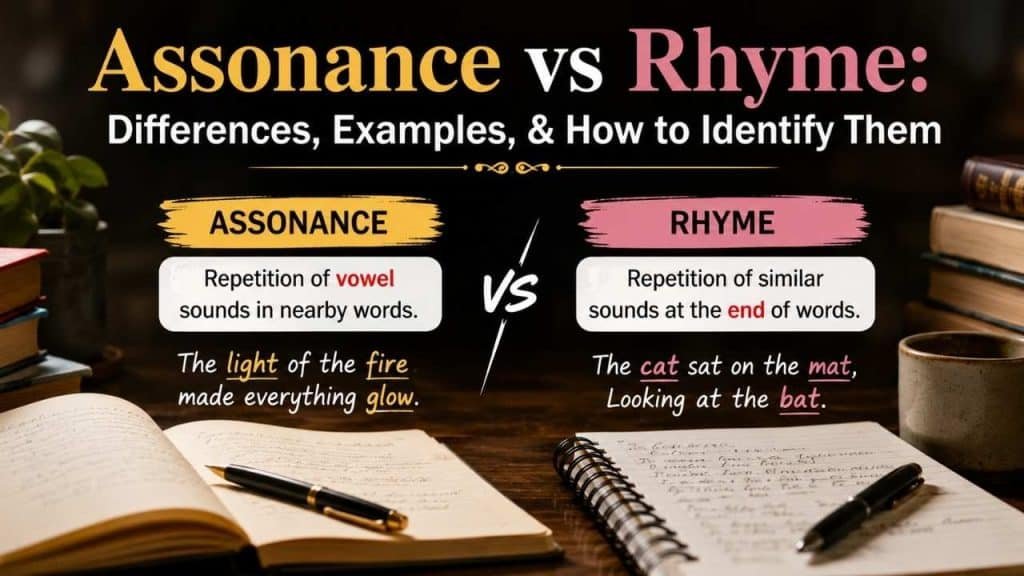

Many people confuse assonance vs rhyme because both use sound repetition to make writing more musical. However, these literary devices work in different ways. Assonance repeats vowel sounds inside nearby words, while rhyme usually repeats sounds at the ends of words. Writers and poets use both techniques to create rhythm in poetry, improve flow, and make lines more memorable.
Understanding the difference between assonance and rhyme can help you identify important poetic devices in poems, songs, and everyday writing. It can also improve your own writing techniques by adding smoother sound patterns and stronger emotional effects.
In this guide, you will learn what is assonance, what is rhyme, their key differences, and simple examples that make these sound devices in literature easier to understand.
Quick Answer
The main difference between assonance vs rhyme is the type of sound repetition they use. Assonance repeats vowel sounds within nearby words, while rhyme repeats similar sounds, usually at the ends of words. Both are important poetic devices that create rhythm, musical flow, and memorable patterns in poetry, songs, and other forms of writing.
Assonance vs Rhyme Comparison Table
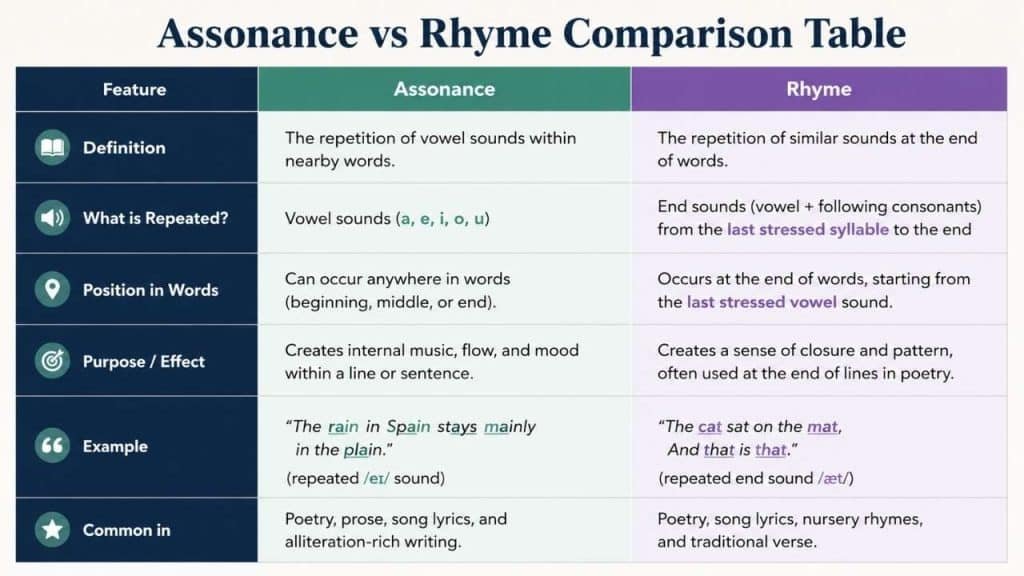
Both assonance and rhyme improve the sound and flow of writing, but they work differently. Assonance focuses on repeating vowel sounds inside nearby words, while rhyme repeats similar sounds, usually at the end of words. These sound devices in literature help writers create rhythm, emotion, and musical effects in poems and songs. Understanding the difference between assonance and rhyme becomes easier when you compare their features side by side.
| Feature | Assonance | Rhyme |
| Sound Type | Repeated vowel sounds | Repeated ending sounds |
| Position | Inside nearby words | Usually at word endings |
| Purpose | Create flow and mood | Create rhythm and memorability |
| Common Use | Poetry and prose | Poems and song lyrics |
| Example | “The light of the fire” | “Cat” and “hat” |
What Is Assonance?
Assonance is a literary device that repeats similar vowel sounds in nearby words. Writers use it to create smoother rhythm and musical flow without repeating exact word endings. Unlike rhyme, assonance can appear anywhere inside a word, not just at the end. This technique adds emotion, mood, and sound patterns to poetry, songs, and even speeches.
For example, in the phrase “the mellow wedding bells,” the repeated “e” sound creates a soft and pleasant effect. Many poets use assonance in poetry to make lines sound more natural and expressive. It also helps readers remember important phrases more easily.
Because of its subtle sound repetition, assonance often feels smoother than rhyme. It works well in modern poetry where writers want rhythm without using obvious rhyming words or forced poetic patterns.
What Is Rhyme?
Rhyme is a poetic device that repeats similar sounds, usually at the ends of words. Writers use rhyme to create rhythm, balance, and musical patterns in poems, songs, and stories. It makes lines easier to remember and gives writing a smooth flow. Unlike assonance, rhyme focuses on matching ending sounds instead of repeated vowel sounds inside words.
For example, the words “light” and “night” rhyme because they share the same ending sound. Many poems use rhyme schemes to create structure and improve rhythm in poetry. Songwriters also use rhyme to make lyrics more catchy and enjoyable.
There are different types of rhyme, including perfect rhyme, slant rhyme, and internal rhyme. Each type creates a different sound effect. Because rhyme sounds clear and noticeable, it often gives writing a stronger musical feeling than assonance.
Key Differences Between Assonance and Rhyme
The main difference between assonance vs rhyme is the kind of sound repetition they use. Assonance repeats vowel sounds inside nearby words, while rhyme repeats matching sounds at the ends of words. Both are important literary devices, but they create different effects in writing.
For example, “rise high in the bright sky” uses repeated vowel sounds, which creates assonance. On the other hand, “cat” and “hat” form a rhyme because their ending sounds match. Assonance often sounds softer and more natural, while rhyme sounds stronger and more noticeable.
Writers use assonance to improve flow and emotional tone. They use rhyme to build rhythm and memorability. Understanding these differences can help students identify poetic techniques more easily and improve their own creative writing skills.
How to Identify Assonance and Rhyme in Writing
Learning how to identify assonance and rhyme becomes easier when you listen carefully to the sounds in words. Assonance happens when nearby words repeat similar vowel sounds, even if the spelling looks different. For example, “slow road home” repeats the long “o” sound. The words do not rhyme, but they create smooth sound patterns.
Rhyme happens when words share similar ending sounds, such as “moon” and “soon.” Rhyming words usually appear at the ends of lines in poetry or song lyrics. Reading lines aloud can help you hear these patterns more clearly.
Many students confuse rhyme with assonance because both involve sound repetition. A simple trick is to check where the repeated sound appears. If it repeats inside words, it is usually assonance. If it repeats at word endings, it is rhyme.
Can Assonance and Rhyme Be Used Together?
Yes, writers often use assonance and rhyme together to create richer sound patterns in poetry and songs. These poetic devices work well together because they improve rhythm, flow, and emotional impact at the same time. Rhyme creates strong ending sounds, while assonance adds softer vowel repetition inside nearby words.
For example, the line “The light of the night shines bright” uses both techniques. The words “light,” “night,” and “bright” rhyme because they share the same ending sound. At the same time, the repeated long “i” sound also creates assonance.
Many poets combine these sound devices in literature to make their writing more musical and memorable. Songwriters also use them to improve lyrical flow. Using both techniques together helps writing sound natural instead of overly forced or repetitive.
Assonance vs Rhyme vs Alliteration
People often confuse assonance, rhyme, and alliteration because all three are popular literary devices that repeat sounds. However, each one works differently. Assonance repeats vowel sounds inside nearby words, while rhyme repeats matching ending sounds. Alliteration repeats the same beginning consonant sounds in nearby words.
For example, “wild winds whisper” uses alliteration because several words start with the “w” sound. The phrase “deep green sea” shows assonance because of the repeated long “e” sound. Words like “star” and “car” form a rhyme because their ending sounds match.
Writers use these poetic techniques to improve rhythm, mood, and musical flow in writing. Understanding their differences helps readers identify sound patterns more easily and improves creative writing skills in poetry, speeches, and storytelling.
Examples of Assonance and Rhyme in Famous Literature
Many famous writers use assonance and rhyme to create memorable sound patterns in poetry and literature. These literary devices help writers improve rhythm, emotion, and musical flow. In Edgar Allan Poe’s poem “The Bells,” repeated vowel sounds create strong examples of assonance in poetry. The repeated sounds make the lines feel smooth and dramatic.
Rhyme also appears in many classic poems and songs. Robert Frost often used rhyme to give structure and rhythm to his poetry. For example, words like “know” and “snow” create a clear rhyming pattern that readers can easily hear.
Modern songwriters also use these poetic devices in lyrics to make songs catchy and emotional. By studying famous examples, readers can better understand the difference between assonance and rhyme and learn how sound repetition improves creative writing.
Why Sound Devices Matter in Poetry and Writing
Sound devices in literature help writers create rhythm, emotion, and stronger meaning in their work. Techniques like assonance, rhyme, and alliteration make writing more enjoyable to read and easier to remember. These poetic devices also add musical flow, which helps poems and songs sound more natural and expressive.
For example, repeated vowel sounds can create a calm or emotional feeling, while rhyme can make lines feel balanced and memorable. Writers often use these techniques to guide readers’ attention and highlight important ideas. Sound patterns also improve storytelling by making language feel more alive and engaging.
In poetry, speeches, and song lyrics, these literary techniques help create mood and rhythm. Without sound repetition, writing may sound flat or less interesting. That is why many poets and songwriters carefully choose words based on their sound as well as their meaning.
When Should You Use Assonance Instead of Rhyme?
Writers often use assonance instead of rhyme when they want smoother and more natural sound patterns. Assonance creates gentle rhythm through repeated vowel sounds, while rhyme creates stronger and more noticeable ending sounds. In modern poetry, many writers prefer assonance because it sounds less forced and gives writing a softer flow.
For example, free verse poems often use assonance to build mood without following strict rhyming patterns. Writers also use it in speeches and storytelling to create emotional effects without making lines sound overly musical. Because assonance feels subtle, it works well in serious or emotional writing.
Rhyme, on the other hand, works better when writers want strong rhythm and memorability. Understanding when to use each poetic device can improve writing techniques and help create better rhythm, flow, and emotional impact in literature.
Related Literary Devices
To fully understand assonance vs rhyme, it also helps to learn other related literary devices. These poetic devices often work together to create rhythm, sound, and meaning in writing. One important device is alliteration, which repeats the same starting consonant sound in nearby words, such as “soft silent sea.” Another is consonance, which repeats consonant sounds inside or at the end of words.
Writers also use internal rhyme, where rhyming happens inside a line instead of at the end. For example, “I bring the spring inside.” Slant rhyme is another type where sounds are similar but not exactly the same, like “shape” and “keep.”
All these sound devices in literature help improve rhythm, tone, and flow. They also make writing more musical and engaging. By understanding these related terms, readers can better identify how poets and writers build strong sound patterns in poetry and storytelling.
FAQs
What is the difference between assonance and rhyme?
Assonance repeats vowel sounds inside nearby words, while rhyme repeats similar sounds at the end of words.
Is assonance a type of rhyme?
No, assonance is not a type of rhyme. It focuses only on vowel sound repetition, not word endings.
What is rhyme in simple words?
Rhyme is when words sound similar at the end, like “cat” and “hat.”
What is assonance in poetry?
Assonance is the repetition of vowel sounds to create rhythm and flow in poetry.
Can assonance and rhyme appear in the same line?
Yes, writers often use both together to improve rhythm and musical effect.
Why do writers use assonance?
Writers use assonance to create smooth flow, mood, and emotional tone in writing.
Why is rhyme important in poetry?
Rhyme adds structure, rhythm, and makes poems easier to remember.
What is the easiest way to identify assonance?
Listen for repeated vowel sounds inside words, not just at the end.
What is the easiest way to identify rhyme?
Check if words share the same ending sound, like “day” and “play.”
Are assonance and rhyme used in songs?
Yes, songwriters use both to make lyrics catchy, rhythmic, and memorable.
Conclusion
In conclusion, understanding assonance vs rhyme helps you see how writers use sound to improve meaning and rhythm. Assonance focuses on repeated vowel sounds inside words, while rhyme focuses on matching ending sounds. Both are powerful literary devices that shape poetry, songs, and creative writing.
By learning these poetic techniques, you can better identify sound patterns and improve your own writing skills. Whether you are reading poetry or writing your own lines, these sound devices in literature make language more musical, emotional, and engaging.