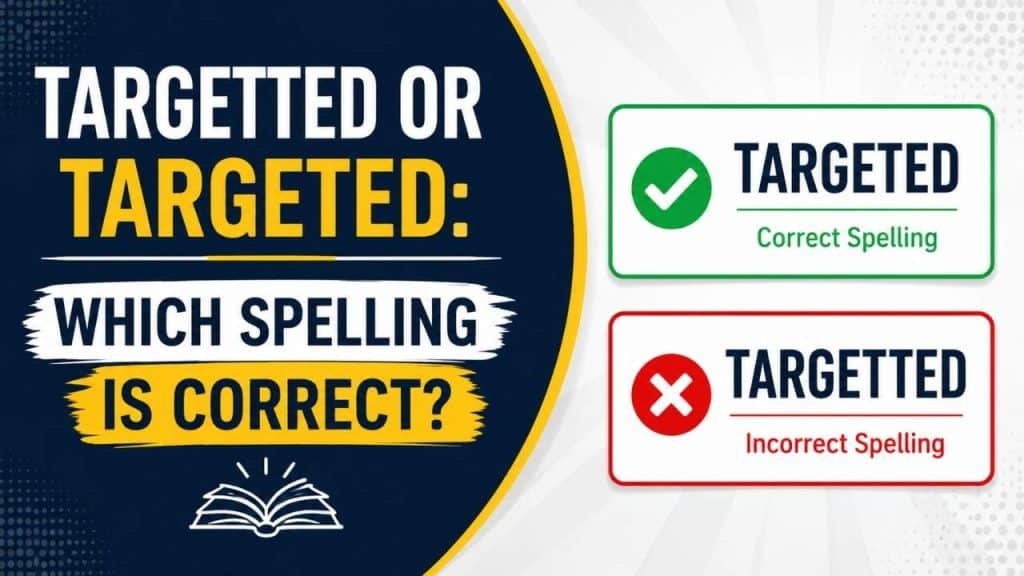

Many writers stop and wonder whether they should use targetted or targeted in their writing. This spelling confusion appears often in emails, reports, academic papers, and online content. If you have ever asked yourself, “Is it targetted or targeted?”, you are not alone. Many people struggle with the same question because some English words double their final consonants while others do not.
The simple answer is that targeted is the correct spelling in modern English. Most dictionaries, style guides, and professional editors prefer targeted spelling over targetted spelling. While you may occasionally see targetted in older texts or informal writing, it is generally considered a common misspelling in both American English and modern British English.
In this guide, you will learn the difference between targeted vs targetted, understand the spelling rules behind the word, discover why people make this mistake, and see real examples of correct usage. You will also learn about targeting vs targetting, common grammar patterns, and practical tips that can help you avoid this spelling error in the future.
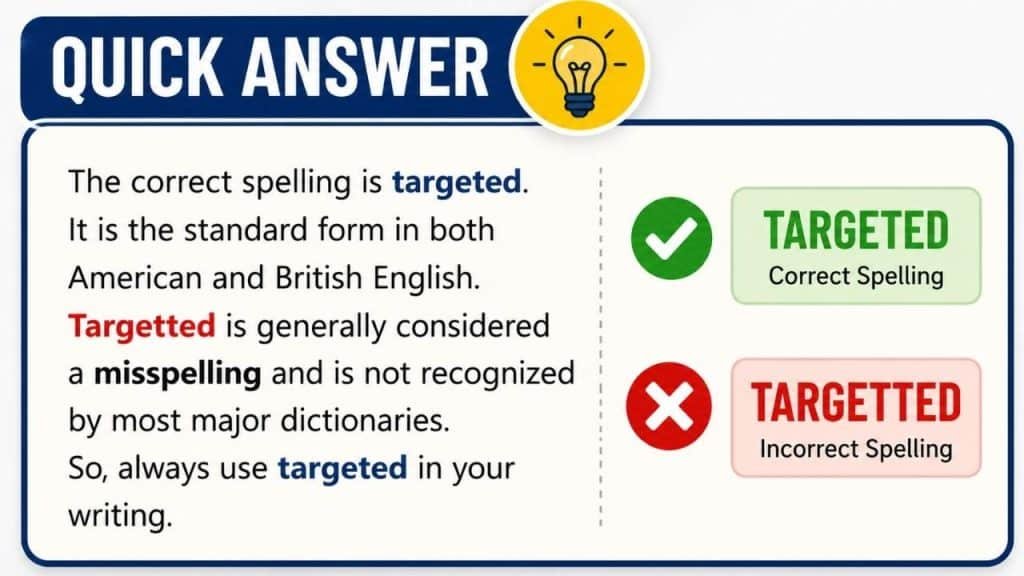
Quick Answer
Targeted is the correct spelling in modern English. Most dictionaries, style guides, and professional writers use targeted and targeting. Although you may occasionally see targetted or targetting, these forms are generally considered nonstandard spellings. For clear, professional, and grammatically correct writing, always use targeted when referring to something aimed at a specific person, group, or goal.
Targetted vs Targeted at a Glance
| Word | Correct? | Meaning |
| Targeted | Yes | Directed toward a specific person, group, or purpose |
| Targetted | No | Nonstandard spelling of targeted |
| Targeting | Yes | The act of directing attention or effort toward something |
| Targetting | No | Nonstandard spelling of targeting |
This simple comparison helps answer the question, “Which spelling is correct?” The accepted forms in both professional and educational settings are targeted and targeting.
You may occasionally encounter targetted spelling in older publications or informal online content. However, modern dictionaries and style guides recommend avoiding it. If you write reports, blog posts, emails, academic papers, or marketing content, always use targeted spelling.
Understanding this difference can help you avoid a common English spelling mistake and improve the quality of your writing.
Which Spelling Is Correct: Targetted or Targeted?
The correct spelling is targeted.
The verb target means to direct attention, effort, or action toward a particular goal, audience, or object. When we add the ending -ed, the standard form becomes targeted, not targetted.
Most major dictionaries list targeted as the accepted spelling. Professional writers, editors, teachers, and publishers also use this version consistently. If you search for correct spelling of targeted, every reliable grammar source points to targeted.
Many people write targetted because they assume the final consonant should double before adding -ed. While that rule applies to some English words, it does not apply here.
To avoid mistakes, remember this simple rule:
- Correct: targeted
- Incorrect: targetted
Using the correct form helps your writing appear polished, professional, and grammatically accurate.
What Does “Targeted” Mean?
The word targeted describes something directed toward a specific person, audience, goal, or group. It often appears in business, education, healthcare, advertising, and communication.
For example:
- The company launched a targeted marketing campaign.
- The teacher created targeted learning activities.
- The organization used targeted communication to reach customers.
In each example, the action focuses on a particular group or purpose.
The targeted definition remains consistent across most situations. It simply means “aimed at” or “directed toward” something specific.
Because the word appears frequently in professional settings, many people search for its meaning, correct usage, and pronunciation. Understanding the word can help you use it naturally in both formal and informal writing.
Whether you write business content or academic papers, targeted remains the preferred spelling.
Why Is “Targeted” Spelled with One T?
Many writers ask, “Why is targeted spelled with one T?”
The confusion comes from English spelling rules involving doubled consonants. Some words double the final consonant before adding -ed or -ing, while others do not.
Examples:
- Stop → Stopped
- Plan → Planned
- Admit → Admitted
However, the word target follows a different pattern. Standard English does not require an extra t when adding endings.
Therefore:
- Target → Targeted
- Target → Targeting
Understanding these grammar rules can prevent common spelling errors. The key is not to assume that every word follows the same consonant-doubling pattern.
While English spelling can sometimes feel confusing, remembering that targeted spelling uses only one additional ending can make the rule much easier to remember.
Why Do People Write “Targetted”?
People often write targetted because they apply the wrong spelling pattern.
English contains many words that double a final consonant before adding a suffix. Because of this, writers sometimes assume that target should become targetted and targetting.
Another reason is exposure. If someone sees the nonstandard spelling online, they may believe it is correct. This creates confusion and causes the mistake to spread.
Similar spelling debates include:
- Focused vs Focussed
- Benefited vs Benefitted
- Canceled vs Cancelled
These examples show why people sometimes struggle with English spelling conventions.
Although targetted appears occasionally, modern dictionaries and style guides still recommend targeted as the standard form. Learning the correct version helps you avoid a common spelling mistake and strengthens your writing.
Targeting vs Targetting: Which Is Correct?
The same rule applies when comparing targeting vs targetting.
The correct spelling is targeting.
| Word | Correct? |
| Targeting | Yes |
| Targetting | No |
The word targeting refers to the act of focusing on a particular audience, objective, or goal.
Examples:
- The company is targeting young consumers.
- The campaign is targeting local businesses.
- Researchers are targeting a specific problem.
Professional writers almost always use targeting because it follows standard spelling conventions.
If you ever feel unsure, remember this simple pattern:
- Target → Targeted
- Target → Targeting
Avoid adding an extra t in either form.
Is “Targetted” Ever Correct in British English?
Some writers wonder whether targetted is acceptable in British English.
This question appears because certain British spellings sometimes differ from American English. However, modern British publishers, dictionaries, and style guides overwhelmingly prefer targeted.
You may find occasional examples of targetted in older texts or less formal sources. However, these examples do not represent current standard usage.
Today, both British English and American English generally favor:
- Targeted
- Targeting
As a result, writers can confidently use targeted regardless of their audience.
If your goal is professional communication, academic writing, or online publishing, using targeted helps ensure clarity and consistency.
Examples of “Targeted” in Sentences
Here are some examples that show the correct usage of targeted.
Business Examples
- The company launched a targeted advertising campaign.
- We created a targeted marketing strategy for new customers.
- The brand used targeted communication to improve engagement.
Academic Examples
- Researchers conducted a targeted study on language development.
- The university introduced targeted support programs for students.
Everyday Examples
- The coach provided targeted advice before the competition.
- The organization offered targeted assistance to local families.
- The teacher gave targeted feedback to help students improve.
These examples demonstrate how the word naturally fits into different contexts.
Common Words Similar to Targeted
Many spelling mistakes happen because English contains similar word patterns.
| Correct | Alternative or Common Confusion |
| Targeted | Targetted |
| Targeting | Targetting |
| Focused | Focussed |
| Benefited | Benefitted |
| Canceled | Cancelled |
Some of these alternatives appear in certain regional styles, while others remain uncommon.
The best approach is to follow modern dictionary recommendations and maintain consistency throughout your writing.
When you learn these patterns, you can avoid many common grammar and spelling errors.
FAQs
Is targetted a real word?
You may occasionally see it in writing, but targeted remains the accepted standard spelling.
Why is targeted spelled with one T?
The word follows standard spelling conventions that do not require doubling the final consonant.
Is targetted accepted anywhere?
Some older sources contain it, but modern dictionaries and style guides generally prefer targeted.
How do you spell targeting?
The correct spelling is targeting.
What is the meaning of targeted?
It means directed toward a specific person, audience, goal, or purpose.
Conclusion
When comparing targetted or targeted, the correct choice is targeted. The same rule applies to targeting vs targetting, where targeting is the preferred form.
Although you may occasionally encounter targetted spelling, it is not the standard version used in modern English. Most dictionaries, editors, publishers, and grammar experts recommend targeted for professional, academic, and everyday writing.
If you want clear and accurate communication, remember this simple rule: use targeted and targeting, and avoid targetted and targetting. Following this guideline will help your writing appear more polished, credible, and grammatically correct.