Many English learners confuse flounder vs founder because these words look and sound alike. However, they have very different meanings. Understanding the difference between flounder and founder can improve your writing clarity and help you avoid common grammar mistakes in both academic and professional writing.
The word flounder usually means to struggle awkwardly or act without confidence. In contrast, founder can mean two things. It may describe a person who establishes a company, or it can mean to fail, collapse, or sink. Because both words appear in everyday English vocabulary, many writers mix them up.
In this guide, you will learn the flounder meaning, the founder meaning, pronunciation differences, sentence examples, memory tricks, and the correct usage of both words. By the end, you will easily understand flounder vs founder meaning and usage in real-life situations.
Quick Answer
The difference between flounder and founder is simple. Flounder means to struggle awkwardly, feel confused, or act without direction. Founder can mean a person who establishes a business or organization, or it can mean to fail, collapse, or sink. Although these commonly confused words sound similar, they have different meanings and usage in English grammar.
Flounder vs Founder at a Glance
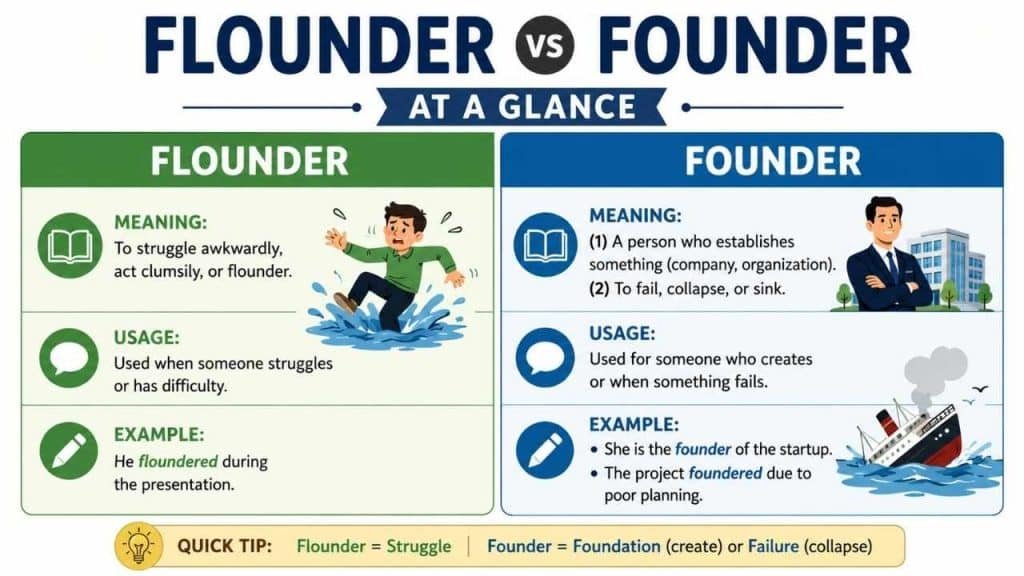
Understanding the quick difference between flounder and founder becomes much easier when you compare both words side by side. Although these commonly confused words share similar spelling and pronunciation, they describe different actions and ideas.
| Word | Meaning | Example |
| Flounder | To struggle awkwardly or act with confusion | He floundered during the presentation. |
| Founder | To establish something or fail/sink | She is the founder of the startup. |
The word flounder often describes someone who struggles emotionally, physically, or mentally. People may flounder during stressful situations, difficult conversations, or challenging tasks. On the other hand, founder usually relates to creating a business or organization. However, founder can also describe something collapsing or failing completely.
This simple comparison helps English learners quickly understand the difference in meaning, proper grammar usage, and contextual meaning of both confusing English words.
What Does Flounder Mean?
The flounder meaning refers to struggling awkwardly, moving clumsily, or acting without clear direction. People often use this word when someone feels confused, nervous, or overwhelmed. In English grammar, flounder works mainly as a verb.
For example, a student may flounder during an exam if they forget important answers. A speaker may also flounder during a presentation when they lose confidence or struggle to explain ideas clearly. This word often carries a negative emotional tone because it describes confusion or difficulty.
How to Pronounce Flounder
People pronounce flounder as:
FLOWN-der
Examples of Flounder in Sentences
- He floundered during the job interview.
- The team floundered under pressure.
- She floundered while answering difficult questions.
Many English learners search for how to use flounder in a sentence because the word appears in academic writing, workplace communication, and daily conversations.
What Does Founder Mean?
The founder meaning changes depending on how you use the word. In English vocabulary, founder can work as both a noun and a verb. This dual meaning often creates vocabulary confusion for many writers and ESL learners.
Founder Meaning #1: A Person Who Establishes Something
Most people know founder as someone who creates or establishes a business, organization, or company. For example, Elon Musk is the founder of several technology companies. In this context, the word connects with leadership, business creation, and innovation.
Examples
- She became the founder of a successful startup.
- The company founder introduced a new product.
Founder Meaning #2: To Sink, Collapse, or Fail
As a verb, founder can also mean to fail completely, collapse, or sink. People often use this meaning in business discussions or nautical contexts.
Examples
- The project foundered because of poor planning.
- The ship began to founder during the storm.
This second meaning explains why people confuse founder vs flounder in writing.
Flounder vs Founder: Key Differences
The key differences between flounder and founder become clearer when you compare their meaning, tone, and grammar role. Both words describe negative situations in some contexts, but they communicate different ideas.
| Feature | Flounder | Founder |
| Meaning | To struggle awkwardly | To establish or fail |
| Part of Speech | Verb | Noun and verb |
| Common Context | Confusion or difficulty | Business or collapse |
| Emotional Tone | Uncertainty | Success or failure |
The word flounder usually focuses on struggle, confusion, or lack of direction. Someone may flounder while learning a new skill or solving a problem. In contrast, founder often appears in business writing, startup discussions, and formal communication.
Understanding these semantic differences improves your vocabulary learning and helps you avoid communication mistakes. If you know the contextual meaning of both words, you can write with greater confidence and clarity.
Why Are Flounder and Founder Confused?
Many people confuse flounder and founder because both words share similar spelling, pronunciation, and sentence structure. This type of lexical confusion often affects English learners and even native speakers.
Another reason for the confusion comes from their negative meanings. The word flounder describes struggling awkwardly, while one meaning of founder describes failing or collapsing. Because both words connect with difficulty or failure, writers sometimes mix them up in professional writing and academic writing.
Pronunciation also causes problems. Both words begin with similar sounds and contain two syllables. When spoken quickly, they sound almost identical to some listeners.
In addition, people often know the “business founder” meaning but forget that founder can also mean “to sink or fail.” This misunderstanding increases vocabulary confusion and leads to grammar mistakes in daily English usage.
Learning their meanings separately helps you remember the correct usage more easily.
Common Mistakes People Make
Many writers make grammar mistakes when using flounder vs founder because they focus only on spelling similarity instead of contextual meaning. One of the most common errors happens when someone uses flounder instead of founder in business writing.
Incorrect:
- She is the flounder of the company.
Correct:
- She is the founder of the company.
Another common mistake happens when writers confuse struggling with failure.
Incorrect:
- He foundered during the interview.
Correct:
- He floundered during the interview.
People also misunderstand the second meaning of founder. Some writers believe founder only refers to a business owner. However, founder can also mean to collapse, fail, or sink.
These commonly confused words create problems in academic writing, professional communication, and spoken English. Understanding proper word usage helps you avoid misunderstood words and improve your writing clarity.
Memory Trick to Remember Flounder vs Founder
A simple memory trick can help you remember the difference between flounder and founder without confusion. Mnemonic techniques improve vocabulary learning and help English learners avoid common writing mistakes.
Think about the word flounder as “fumbling” or “flopping around.” Both ideas involve struggle and confusion. If someone flounders, they usually lose direction or confidence during a difficult situation.
Now think about founder as “foundation.” A founder creates or establishes something, such as a company, school, or organization. This association makes the business meaning easier to remember.
For the second meaning of founder, connect it with “failure.” When a project or ship founders, it collapses or sinks completely.
Quick Memory Trick
- Flounder = Struggle
- Founder = Create or Fail
This easy vocabulary guide helps language learners remember the correct word choice in daily English usage and professional writing situations.
FAQs
What is the difference between flounder and founder?
Flounder means to struggle awkwardly or act without confidence. Founder means to establish something or fail and collapse completely.
What does flounder mean?
The word flounder describes struggling, confusion, or clumsy movement during a difficult situation. It usually works as a verb in English grammar.
What does founder mean?
Founder can mean a person who creates a business or organization. It can also mean to sink, collapse, or fail completely.
Can founder mean fail?
Yes, founder can mean fail or collapse. People often use this meaning in business, project management, and nautical contexts.
Why do people confuse flounder and founder?
People confuse these words because they sound similar and both relate to difficult situations. Their similar spelling also creates vocabulary confusion.
Is flounder always negative?
Yes, flounder usually carries a negative meaning because it describes struggle, confusion, or lack of direction.
Is founder a noun or a verb?
Founder can work as both a noun and a verb. As a noun, it means a creator; as a verb, it means to fail or sink.
Conclusion
Understanding flounder vs founder becomes easier once you learn their meanings, grammar roles, and contextual usage. The word flounder describes struggling awkwardly or feeling confused, while founder usually refers to creating something or failing completely. Although these commonly confused words sound similar, they communicate very different ideas in English writing.
Many English learners mix them up because of pronunciation similarities and shared negative meanings. However, remembering simple associations like “flounder = struggle” and “founder = foundation or failure” can help you avoid grammar mistakes.
Whether you write academic content, professional emails, or daily conversations, understanding the difference between flounder and founder improves writing clarity and vocabulary confidence. With regular practice and sentence examples, you can use both words correctly in real-life communication.