Dustin Hoffman is a seasoned English language trainer with a focus on IELTS and TEFL preparation.
He holds a Ph.D. in Applied Linguistics and has over 10 years of teaching experience.
Dustin Hoffman is passionate about helping students achieve fluency and global opportunities.
His classes combine practical techniques with a supportive, student-first approach.
Many people see the phrase “which of the following” in multiple choice questions, quizzes, surveys, and exams, but they often feel confused about its exact…
Many English learners feel confused about what kind of vs what kinds of because both phrases look very similar. However, these expressions follow different grammar…
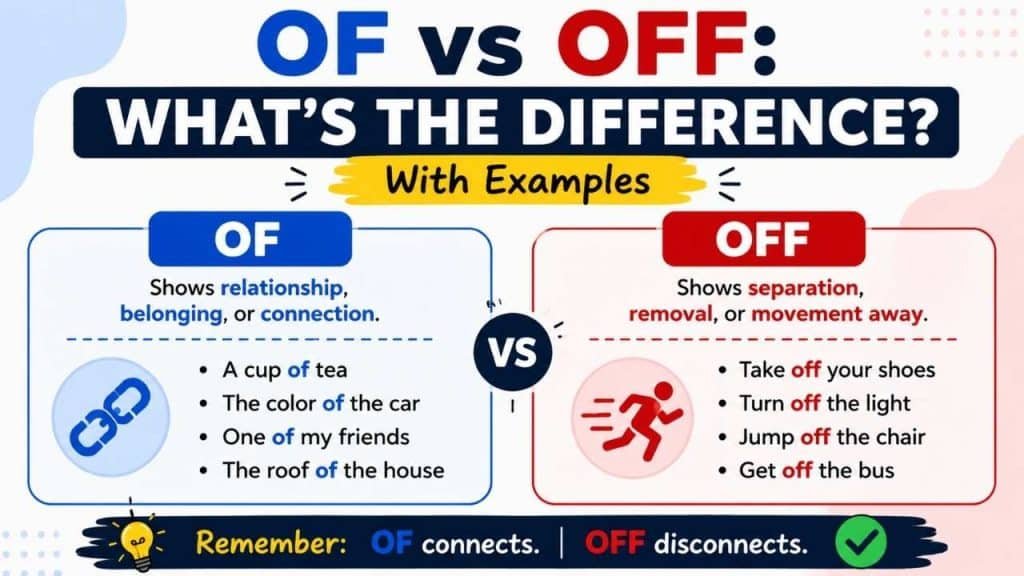
Many English learners confuse of vs off because both words sound similar in fast speech. However, these two words have very different meanings and grammar…
People often confuse idiom vs proverb because both belong to figurative language in English. However, they are not the same. Understanding the difference between idioms…
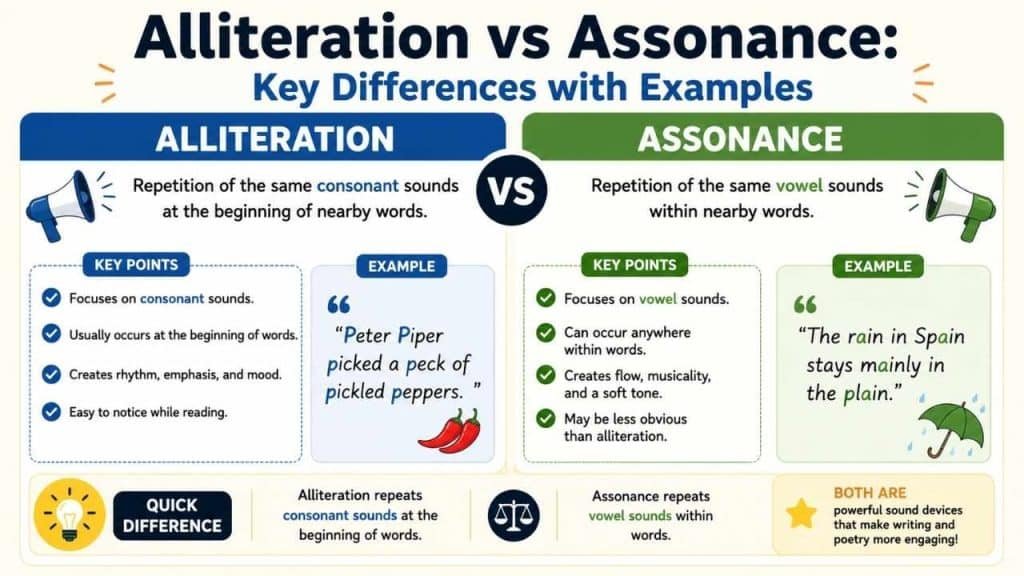
Sound devices are an important part of English literature and poetry, but many learners confuse them. Two of the most commonly mixed-up terms are alliteration…
Many English learners confuse flounder vs founder because these words look and sound alike. However, they have very different meanings. Understanding the difference between flounder…
The confusion between “center” and “centre” is very common in English writing. Both words have the same meaning, but the spelling changes based on region.…
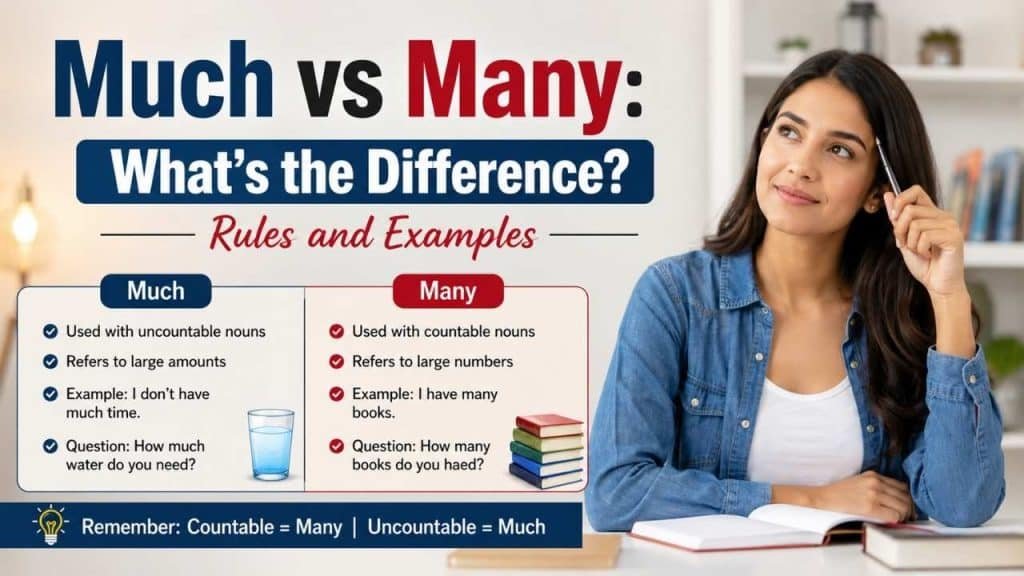
Many English learners confuse much vs many because both words talk about quantity. However, they follow different grammar rules. Understanding the difference between much and…
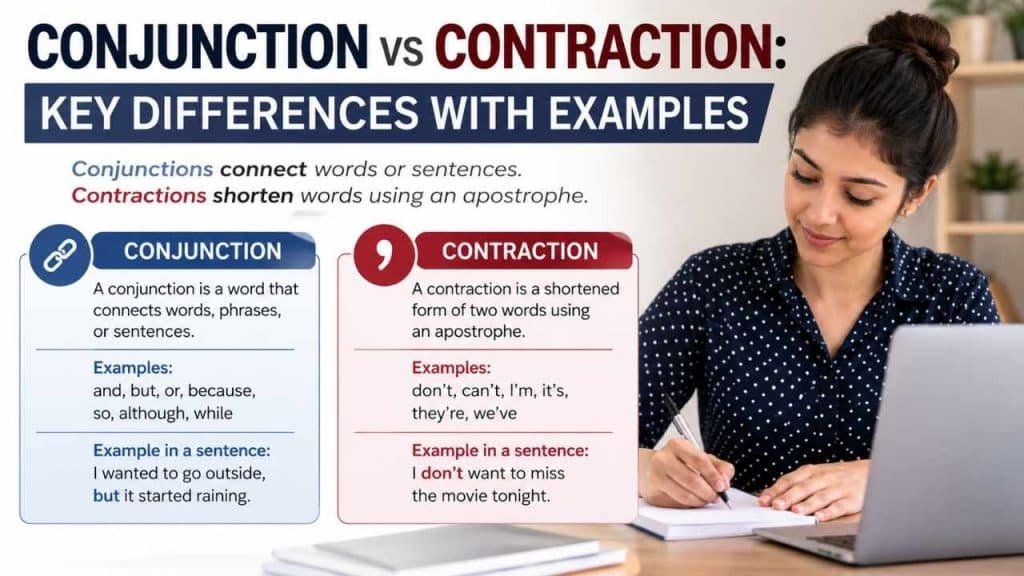
Many English learners often get confused between conjunction vs contraction because both terms sound similar but work in completely different ways in grammar. Understanding the…
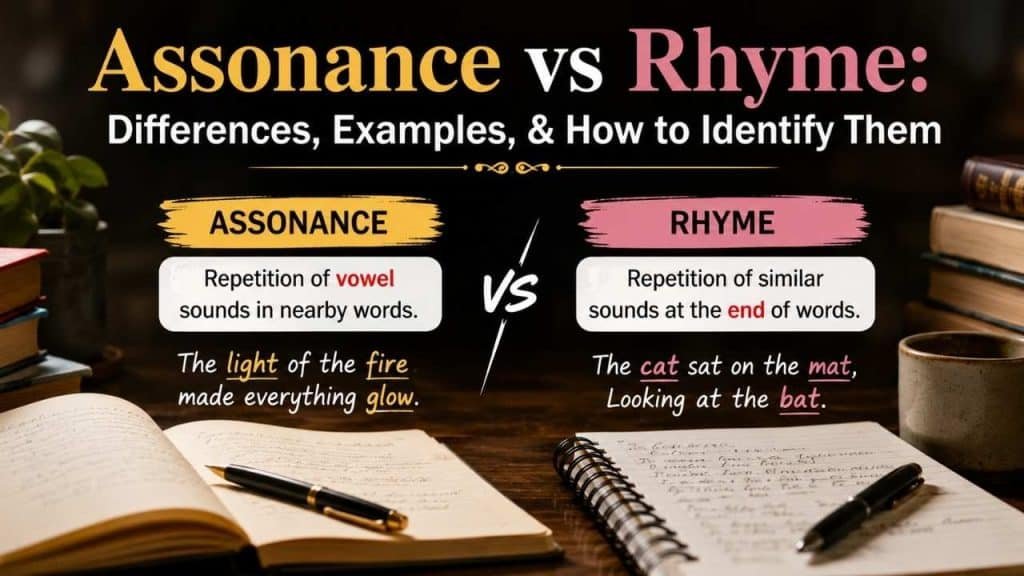
Many people confuse assonance vs rhyme because both use sound repetition to make writing more musical. However, these literary devices work in different ways. Assonance…