Skip to content
GrammarDock

GrammarDock

  • Home
  • About Us
  • Blog
  • Contact Us

Blog

Home » Blog
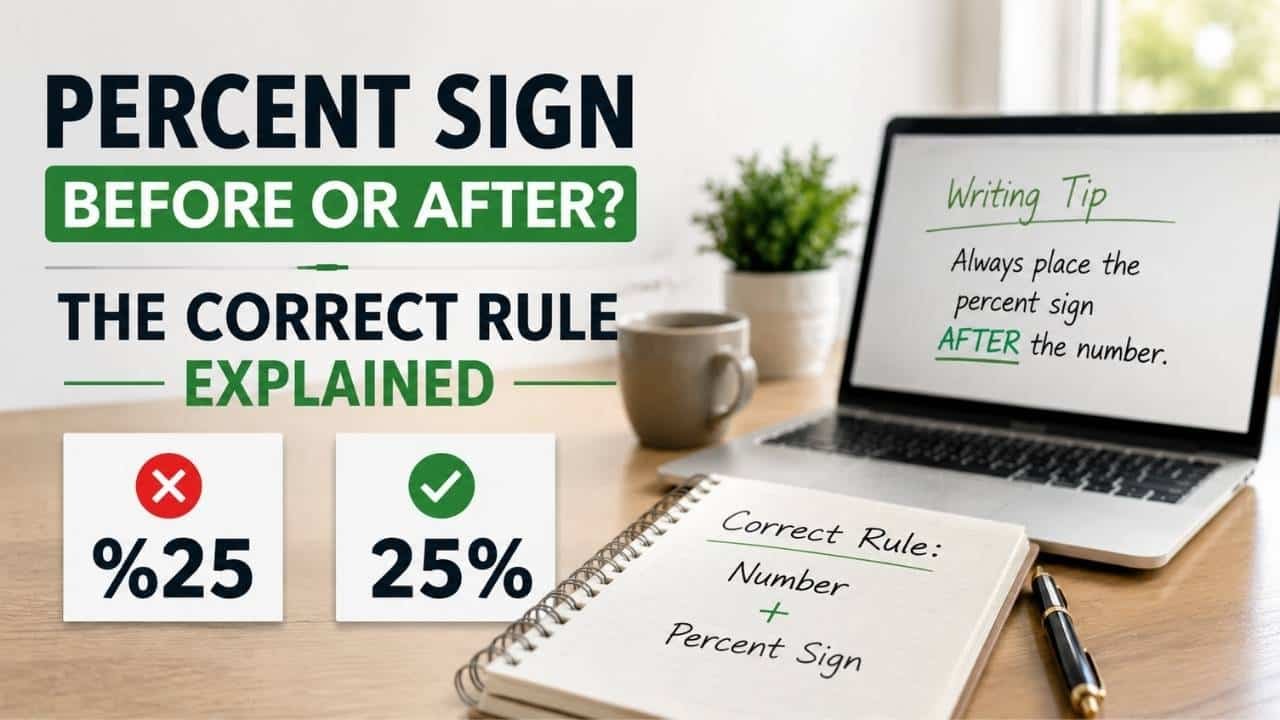
When you write a percentage in English, you may wonder whether the percent sign goes before or after the number.
Posted inGrammar

Percent Sign Before or After? The Correct Rule Explained 

When you write a percentage in English, you may wonder whether the percent sign goes before or after the number. The standard format in American…
Continue Reading
08/09/2026
Have you ever received an important warning from a friend, coworker, or family member and replied, "Thanks for the heads up"?
Posted inGrammar

Thanks for the Heads Up Meaning Grammar and Examples 

Have you ever received an important warning from a friend, coworker, or family member and replied, "Thanks for the heads up"? This common English expression…
Continue Reading
08/07/2026
Whether you are attending a birthday, hosting a holiday dinner, or joining a graduation celebration, knowing a few awesome party expressions can make your conversations sound more natural and enjoyable.
Posted inWriting Tips

Awesome Party Expressions: 75+ Fun Phrases, Idioms & Examples

Whether you are attending a birthday, hosting a holiday dinner, or joining a graduation celebration, knowing a few awesome party expressions can make your conversations…
Continue Reading
08/06/2026
Have you ever stumbled over a sentence filled with S sounds? That's exactly why S tongue twisters are such a fun and effective way to improve your speaking skills.
Posted inWriting Tips

S Tongue Twisters 100+ Practice Sentences for Fluency

Have you ever stumbled over a sentence filled with S sounds? That's exactly why S tongue twisters are such a fun and effective way to…
Continue Reading
08/04/2026
Home idioms and expressions make English more colorful, natural, and expressive.
Posted inGrammar

Home Idioms and Expressions: 70+ Common Phrases + Meanings 

Home idioms and expressions make English more colorful, natural, and expressive. Native speakers use these idiomatic expressions every day in conversations, books, movies, and even…
Continue Reading
08/03/2026
Whether you're expanding your English vocabulary, improving your writing, or searching for words that end in SE for a word game, having a well-organized list can save time and boost your confidence. 
Posted inWriting Tips

Words That End in SE: Common, Positive & Useful English Words

Whether you're expanding your English vocabulary, improving your writing, or searching for words that end in SE for a word game, having a well-organized list…
Continue Reading
07/30/2026
Many people see the phrase “which of the following” in multiple choice questions, quizzes, surveys, and exams, but they often feel confused about its exact meaning and grammar.
Posted inWriting Tips

Which of the Following Meaning and Correct Usage in English

Many people see the phrase “which of the following” in multiple choice questions, quizzes, surveys, and exams, but they often feel confused about its exact…
Posted by Dustin Hoffman 05/26/2026
Many English learners feel confused about what kind of vs what kinds of because both phrases look very similar.
Posted inWriting Tips

What Kind of vs What Kinds of: What’s the Difference?

Many English learners feel confused about what kind of vs what kinds of because both phrases look very similar. However, these expressions follow different grammar…
Posted by Dustin Hoffman 05/24/2026
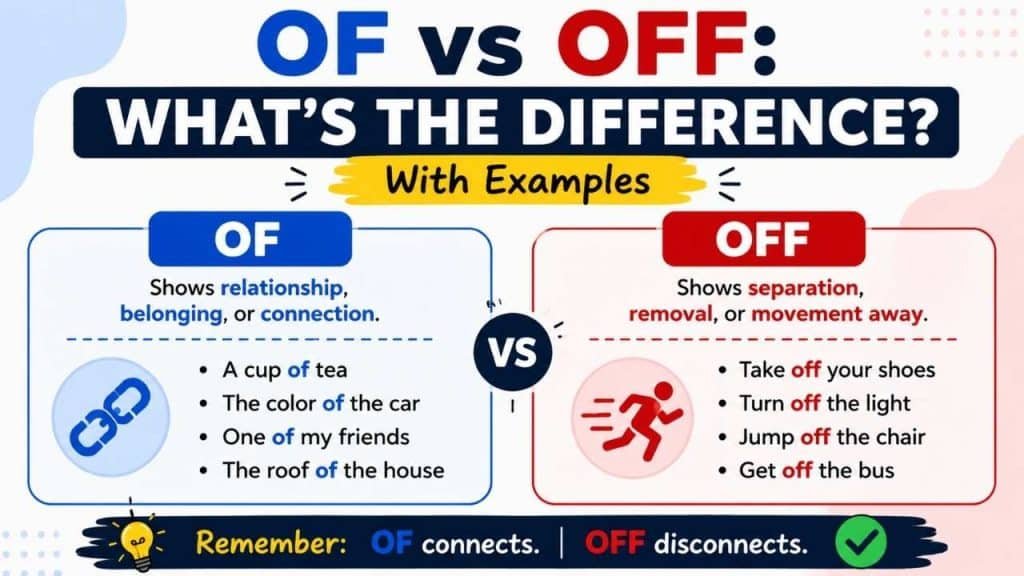
Many English learners confuse of vs off because both words sound similar in fast speech.
Posted inWriting Tips

Of vs Off: What’s the Difference? With Examples

Many English learners confuse of vs off because both words sound similar in fast speech. However, these two words have very different meanings and grammar…
Posted by Dustin Hoffman 05/23/2026
People often confuse idiom vs proverb because both belong to figurative language in English.
Posted inWriting Tips

Idiom vs Proverb Explained with Simple Examples 

People often confuse idiom vs proverb because both belong to figurative language in English. However, they are not the same. Understanding the difference between idioms…
Posted by Dustin Hoffman 05/22/2026
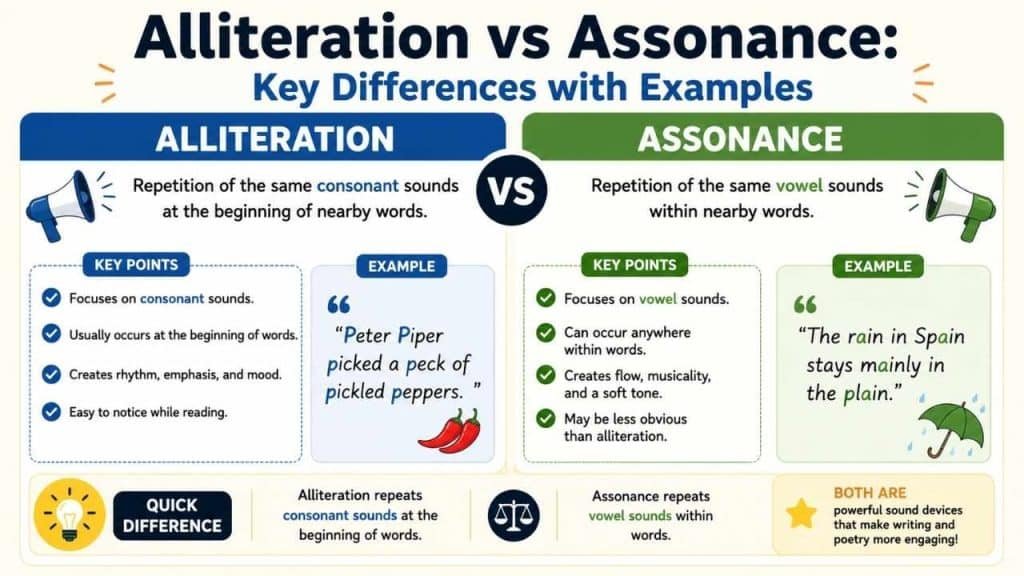
Two of the most commonly mixed-up terms are alliteration vs assonance.
Posted inGrammar

Alliteration vs Assonance: Key Differences with Examples

Sound devices are an important part of English literature and poetry, but many learners confuse them. Two of the most commonly mixed-up terms are alliteration…
Posted by Dustin Hoffman 05/18/2026
Many English learners confuse flounder vs founder because these words look and sound alike
Posted inGrammar

Flounder vs Founder: Meaning, Differences, and Correct Usage

Many English learners confuse flounder vs founder because these words look and sound alike. However, they have very different meanings. Understanding the difference between flounder…
Posted by Dustin Hoffman 05/18/2026
In simple terms, center vs centre refers to American and British English spelling styles.
Posted inWriting Tips

Center vs Centre: Meaning, Difference, and Usage Explained

The confusion between “center” and “centre” is very common in English writing. Both words have the same meaning, but the spelling changes based on region.…
Posted by Dustin Hoffman 05/17/2026
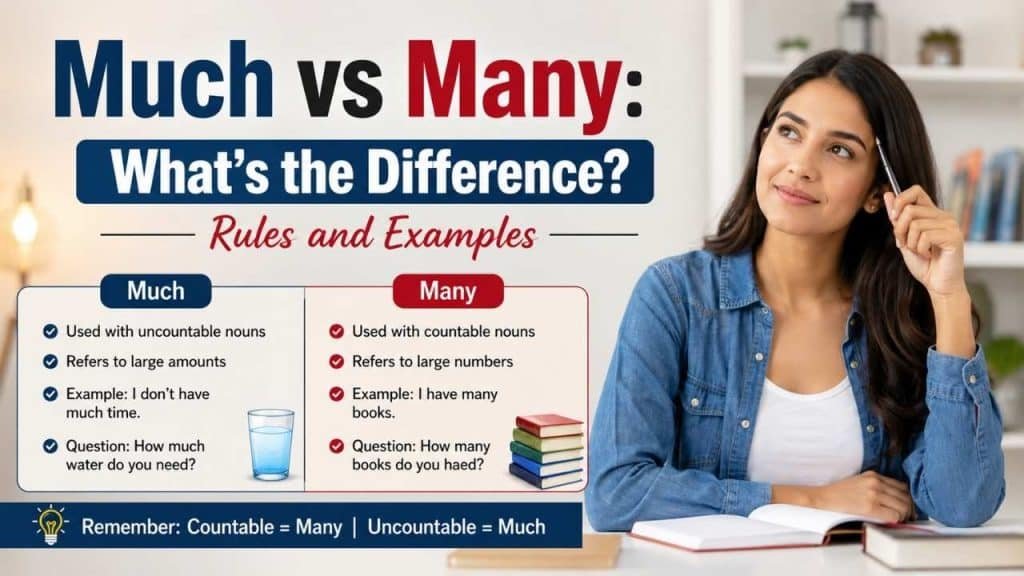
Many English learners confuse much vs many because both words talk about quantity.
Posted inWriting Tips

Much vs Many: What’s the Difference? Rules and Examples

Many English learners confuse much vs many because both words talk about quantity. However, they follow different grammar rules. Understanding the difference between much and…
Posted by Dustin Hoffman 05/17/2026
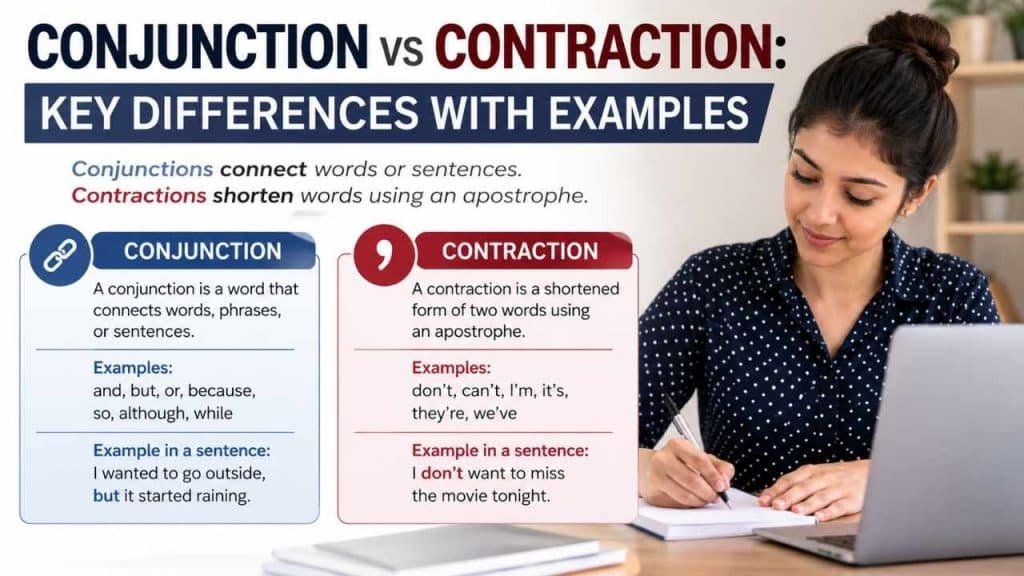
Many English learners often get confused between conjunction vs contraction because both terms sound similar but work in completely different ways in grammar.
Posted inWriting Tips

Conjunction vs Contraction: Key Differences with Examples

Many English learners often get confused between conjunction vs contraction because both terms sound similar but work in completely different ways in grammar. Understanding the…
Posted by Dustin Hoffman 05/16/2026
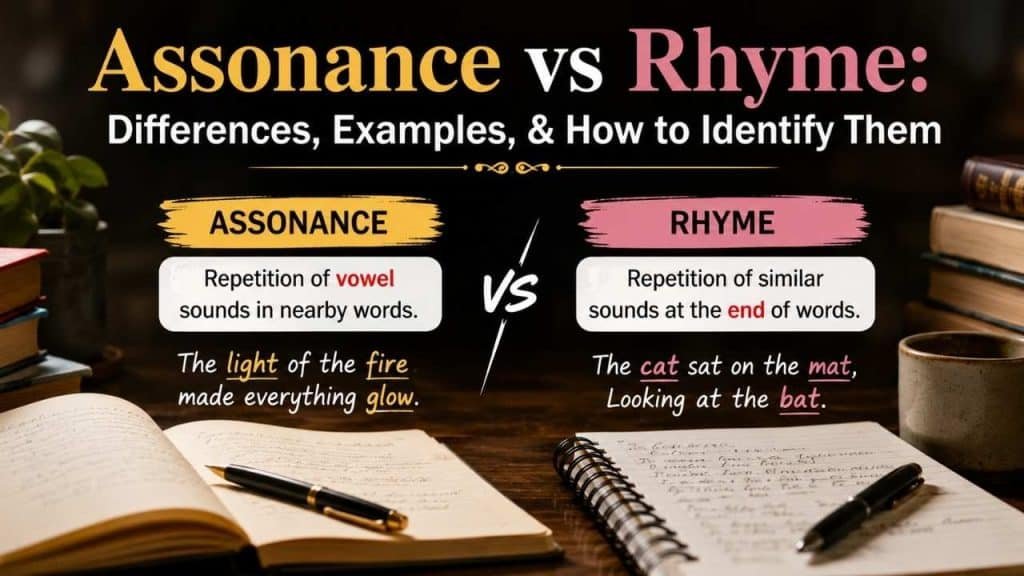
Many people confuse assonance vs rhyme because both use sound repetition to make writing more musical.
Posted inGrammar

Assonance vs Rhyme: Differences, Example, How to Identify Them

Many people confuse assonance vs rhyme because both use sound repetition to make writing more musical. However, these literary devices work in different ways. Assonance…
Posted by Dustin Hoffman 05/16/2026

Posts pagination

Previous page 1 … 5 6 7 8 9 … 19 Next page
Recent Posts
  • Percent Sign Before or After? The Correct Rule Explained 
  • Thanks for the Heads Up Meaning Grammar and Examples 
  • Awesome Party Expressions: 75+ Fun Phrases, Idioms & Examples
  • S Tongue Twisters 100+ Practice Sentences for Fluency
  • Home Idioms and Expressions: 70+ Common Phrases + Meanings 
  • Home
  • Contact Us
  • Blog
  • About Us

grammardock@gmail.com

Copyright 2026 GrammarDock . All rights reserved.
Scroll to Top